
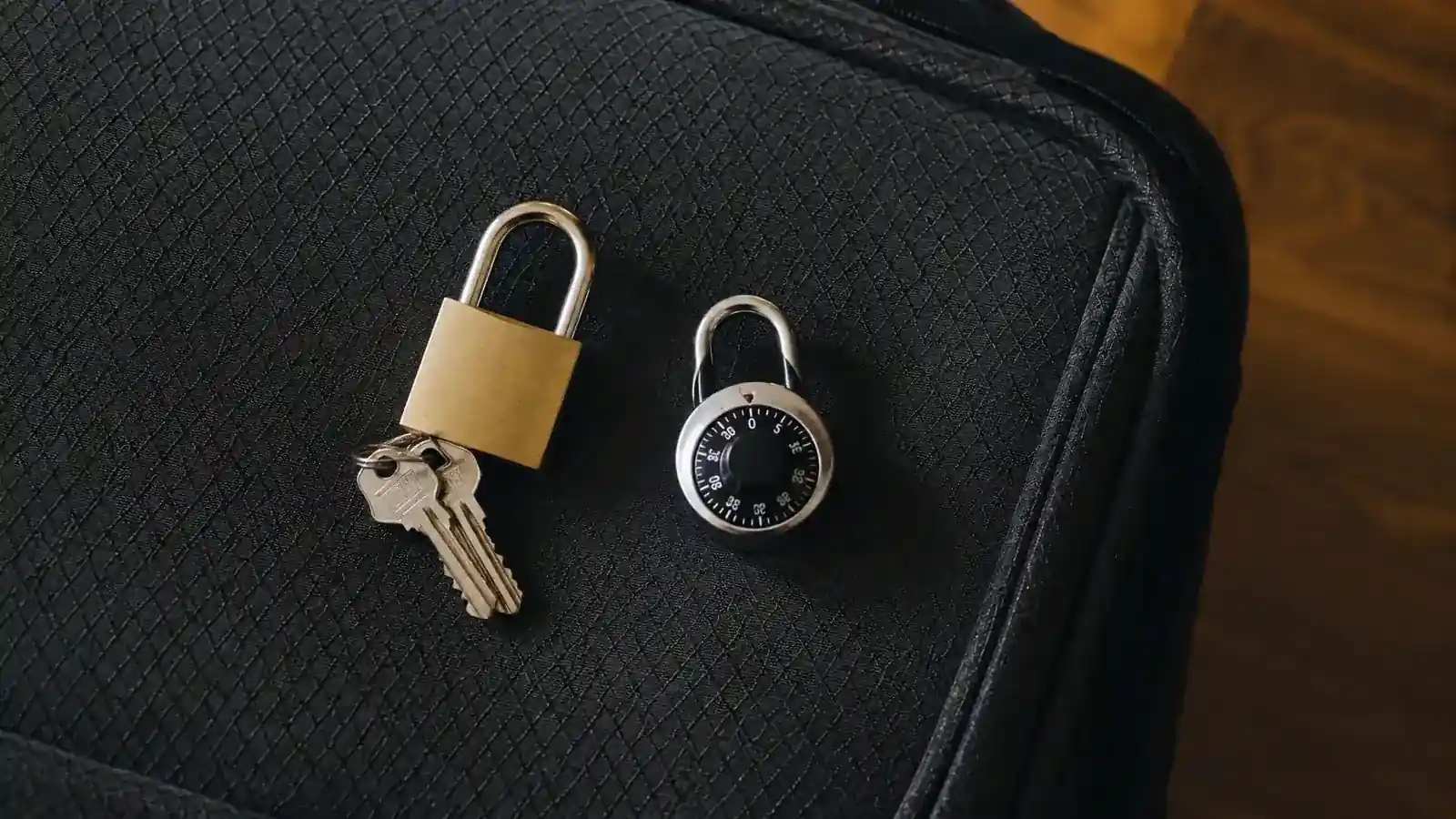
If you're trying to decide between a keyed TSA lock and a combination TSA lock, here's the short answer up front: the Master Lock 4689T two-pack is the one I'd point you toward if you'd rather turn a key at six in the morning than fumble with a dial. It's a straightforward, TSA-accepted keyed lock. You turn the key, it clicks shut, and that's the whole interaction. A combination lock like Sure Lock's solves a different problem, no physical key to lose, and that's a real advantage for a certain kind of traveler. This isn't a case of one product being junk and the other one being good. It's a genuine tradeoff between two different ways of closing a zipper, and which one wins depends less on the lock itself and more on whether you trust yourself with a key or a four-digit code.
I've run the Master Lock 4689T two-pack through close to fifteen round trips this past year, mostly flying out to see my son Mark in Nashville and my daughter Julie in Denver, plus one longer trip to Phoenix with my wife Linda. I haven't put the same mileage on a Sure Lock combination lock, but I've handled the type enough, and read through enough owner feedback on the combination side, to lay out this comparison honestly instead of just repeating what's printed on a box. The core distinction is simple. One locks with a key. The other locks with a number you set yourself. Everything else in this comparison flows from that one difference, right down to how each one behaves after a year of getting tossed around a baggage system that isn't gentle with anything. I'll walk through the parts of my long-term Master Lock review and honest Master Lock review that are relevant here, plus where a combination lock genuinely has the edge.
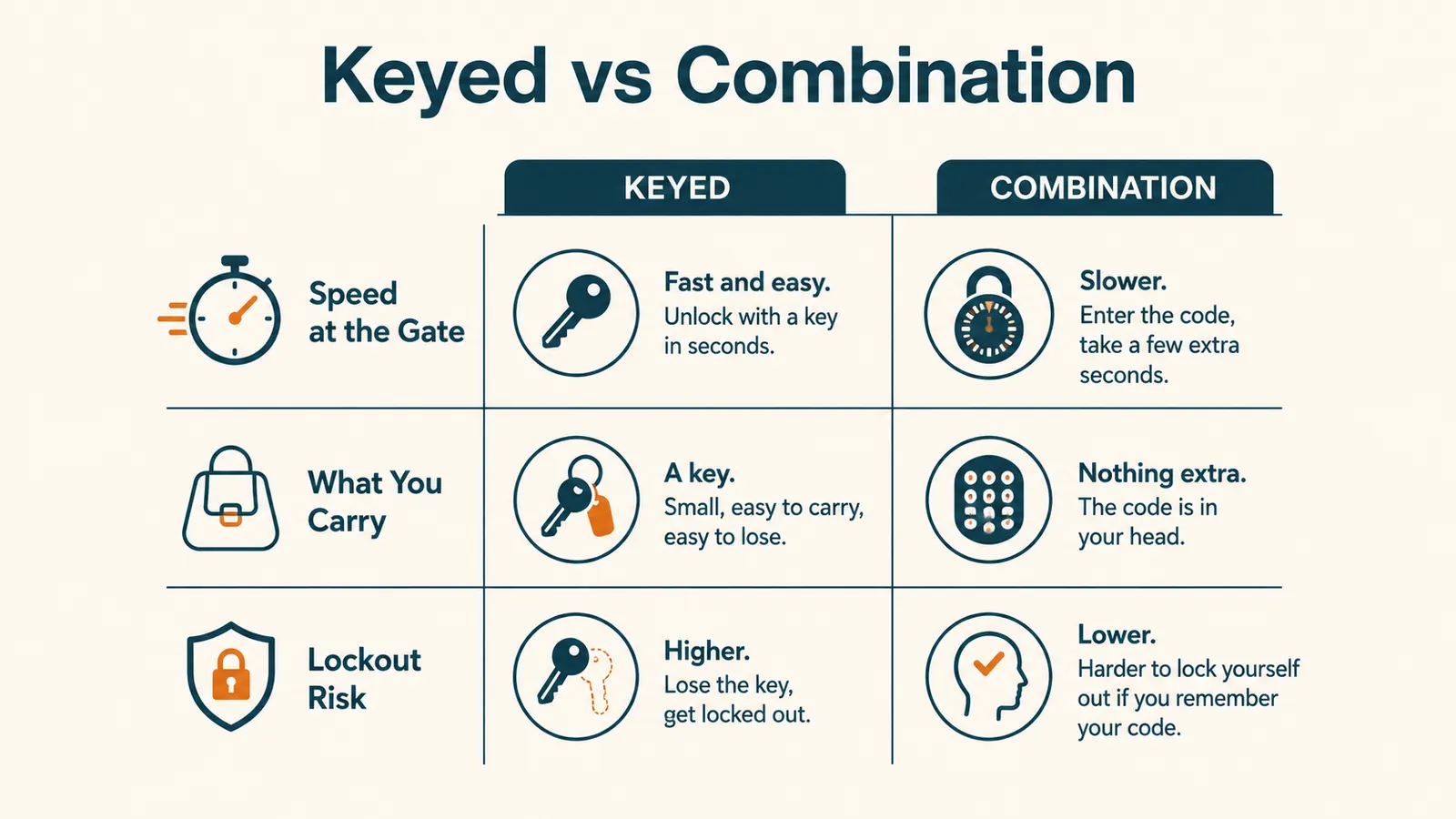
| Master Lock | Sure Lock | |
|---|---|---|
| Locking mechanism | Keyed, includes 2 keys per lock, 4 total in the two-pack | 4-digit combination you set yourself, no physical key involved |
| What you carry | A key on your keyring, plus a spare tucked in a carry-on pocket | Nothing extra to carry, just the code you memorized or wrote down |
| Speed at the gate | Turn a key, done in about a second, no dial to align | Dial in the correct combination, a few extra seconds, more if you're half-asleep at 5am |
| Risk if something's forgotten | Lose the keys and you're cutting the lock off the bag | Forget the code and you're just as stuck, spinning digits at baggage claim |
| TSA acceptance | TSA-accepted, red diamond marking, opens with a TSA master key during inspection | Also commonly sold as TSA-accepted with the same red diamond system |
| Shackle design | Shrouded shackle, recessed into the lock body, harder to get bolt cutters angled onto | Varies by listing, worth checking whether the shackle is shrouded or exposed before buying |
| Sharing access with family | Everyone needs a physical key, or you're passing one key around | Everyone just needs the code, easy to share verbally with a spouse or teenager |
| Best fit | Travelers who'd rather carry a key than remember a number | Travelers who don't want to manage physical keys or worry about losing one |
Where the Master Lock 4689T Wins
Speed and simplicity are the two things that keep me buying keyed locks over combination ones. There's no dial to align, no code to second-guess when you're standing at curbside check-in with a coffee in one hand and a boarding pass in the other. You line the shackle up, push it into the body, it clicks, and you move on with your morning. A combination lock asks a little more of you every single time you use it, and over fifteen trips a year that adds up, even if it's only a few seconds each time. I've never once stood at a departure counter trying to remember which digits I set six months ago, because there's nothing to remember with the keyed lock, just a key that either fits or doesn't.
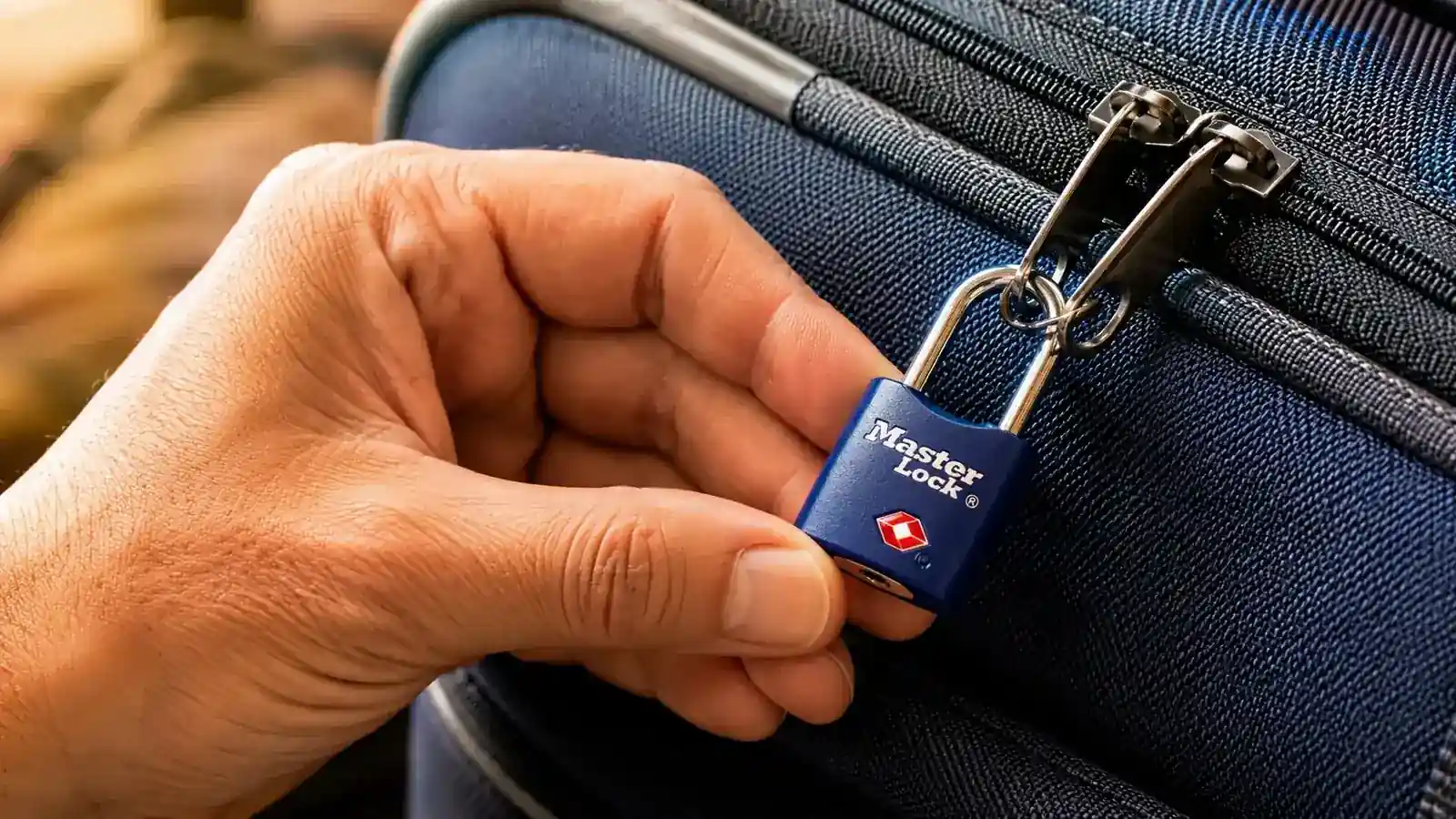
The shrouded shackle on the Master Lock 4689T is another real point in its favor, and it's worth checking for on any combination lock you're considering too, since not every listing in that category builds it the same way. The metal loop that runs through your zipper pulls sits recessed into the lock body instead of hanging out in the open, which forces anyone trying to cut through it with bolt cutters to work at an awkward angle. It's a small design detail, but it's the kind of thing that separates a lock built for actual travel use from one that's just a padlock with TSA printed on the packaging. I go deeper on how that shackle design has held up after a year of checked bags in my long-term review.
The two-pack format also earns its keep. Most soft-side checked bags have two zipper pulls worth locking, the main compartment and a smaller front or side pocket, and one lock alone leaves half the bag wide open. With four keys spread across two locks, Linda and I each keep our own bag fully locked without having to coordinate a shared code before every trip. If you're outfitting more than one traveler in your household, that's a practical edge a single combination lock usually doesn't match unless you buy a matching pair and set them to the same code.
Durability and Long-Term Wear
This is the part most comparisons skip, because it takes actual months to find out. Combination locks have a mechanical weakness keyed locks simply don't, the internal dial wheels are more moving parts, and moving parts wear differently under the kind of rough handling a checked bag gets on a conveyor belt. My Master Lock 4689T locks are closing in on a year of use, roughly fifteen trips, and the lock body still clicks shut the same way it did on day one. No mushy feel, no hesitation on the key turn. I've read enough complaints online about combination locks in this general price range getting stiff or unreliable on the dial after heavy travel that I'd want to see a specific product's long-term reviews before trusting it with a full year of checked bags.
That's not a knock on combination locks as a category, plenty of them hold up fine, it's just an honest observation that a simpler mechanism has fewer ways to fail. What I have seen on my own keyed locks is cosmetic wear, a few scuffs and light scratches on the finish from getting tossed around a baggage system, but nothing that's touched how the lock actually functions. If long-term reliability under real baggage handling is what you're weighing most heavily, that's a point in the keyed lock's favor, though it's worth checking specific owner reviews on any combination lock before you commit a full year of travel to it.
Where the Sure Lock Combination Lock Wins
I'd be lying if I said keyed locks don't have a real downside, and it's the same downside every keyed product has. You can lose the key. I've done it exactly once myself, coming back from Denver, and I only avoided cutting the lock off because Linda had the spare in her bag. A combination lock sidesteps that entire problem. There's nothing physical to misplace in a hotel nightstand or a jacket you left on a plane. If you've got a track record of losing small things on the road, and plenty of us do, that alone is a legitimate reason to go with a combination lock instead.
Combination locks also make it easier to share access on the fly. If you're traveling with a teenager or a spouse and you want them able to get into a bag without handing over a key you might need yourself, telling someone a four-digit code is simpler than making sure a second physical key exists and ends up in the right hands. And if you ever travel with a group where more than two people might need to open the same bag, a shared code scales better than passing a single key back and forth at a gate. That's a genuine convenience keyed locks like the 4689T just can't offer, no matter how good the shackle design is.
Stop Standing at Baggage Claim Patting Down Your Pockets for a Key
The Master Lock 4689T two-pack ships with four keys total, so even if you're the kind of traveler who's misplaced a house key before, you've got margin built in before this decision ever costs you a cut lock.
Amazon Check Today's Price on Amazon →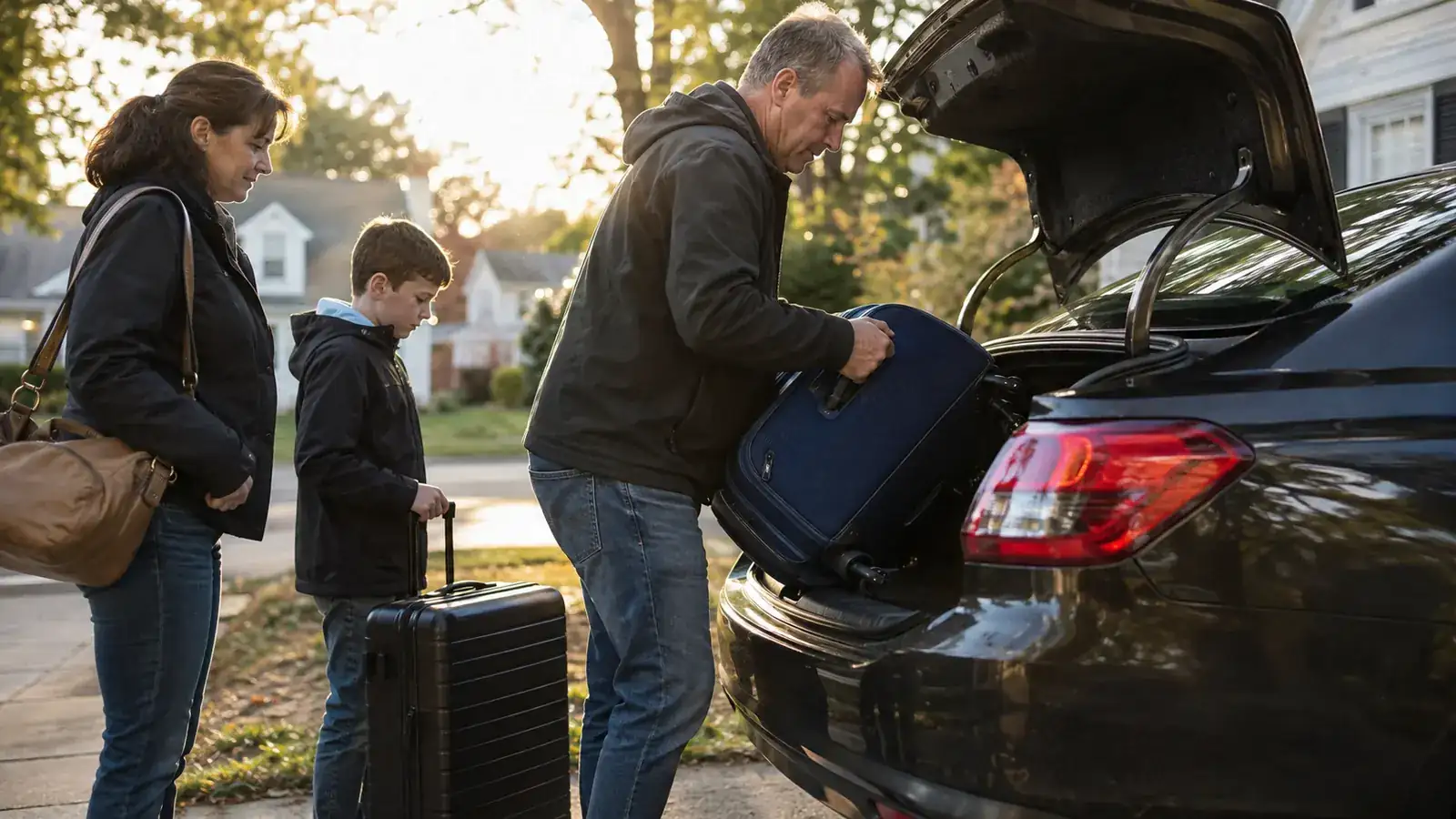
What Neither Lock Actually Solves
I want to be straight with you here, because I've read reviews on other sites that oversell what any TSA lock, keyed or combination, actually does. Neither one makes your bag theft-proof. Anyone determined to get into a soft-side suitcase can cut the zipper's fabric track itself and bypass the lock entirely, lock body untouched, whether it's a Master Lock or a Sure Lock or anything else with a TSA red diamond stamped on it. What either style of lock actually buys you is friction against the low-effort stuff, the casual zipper-diving in a crowded terminal, the opportunistic tug at baggage claim while you're distracted looking for a cart. That's a deterrent, not a vault, and it's worth understanding before you buy either one. I lay out the realistic case for what a lock like this does protect against in 10 reasons TSA luggage locks protect your bags.
That said, the deterrent effect covers the overwhelming majority of what actually happens to a checked bag. I've had TSA pull my locked bag for inspection twice this year, once out of Denver and once out of Orlando, and both times their master key let them open it, do their check, and lock it back up before it hit the belt. No cut locks, no surprises at baggage claim. If you're new to locking checked bags at all and want the step-by-step on where to put the lock and how tight to thread it, I walked through the whole process in how to secure checked luggage with a TSA lock, and the story of why I started locking bags in the first place is in how a TSA lock ended my worry about checked bags.
Neither a key nor a combination stops someone willing to cut through zipper fabric. What either one stops is the casual stuff, and honestly, that's most of what actually happens to a checked bag.
Who Should Buy Which
If you'd rather turn a key than dial in a code, and you've got a reliable way to keep track of one, the Master Lock 4689T two-pack is the one I'd check today's price on. It's what's been on my bags for close to fifteen trips now, it's fast at the gate, it's shown no wear on the mechanism itself after a year of real handling, and the shrouded shackle holds up to the kind of treatment a checked bag actually gets. If you know yourself well enough to say you'll lose a key on a long trip through multiple airports, or you're traveling with people who need shared access without passing a single key around, a combination lock like Sure Lock is the more sensible pick, and there's no shame in going that direction. Either style beats an unlocked zipper. The real decision here isn't about brand, it's about which kind of small daily habit you trust yourself to keep, remembering a code or holding onto a key.
Turn a Key, Not a Dial, and Get On With Your Morning
Close to fifteen trips in, zero cut locks, zero surprises at baggage claim. The Master Lock 4689T two-pack has earned its spot in my carry-on, and with four keys total, it's built to survive the fact that people misplace things.
Amazon Check Today's Price on Amazon →