
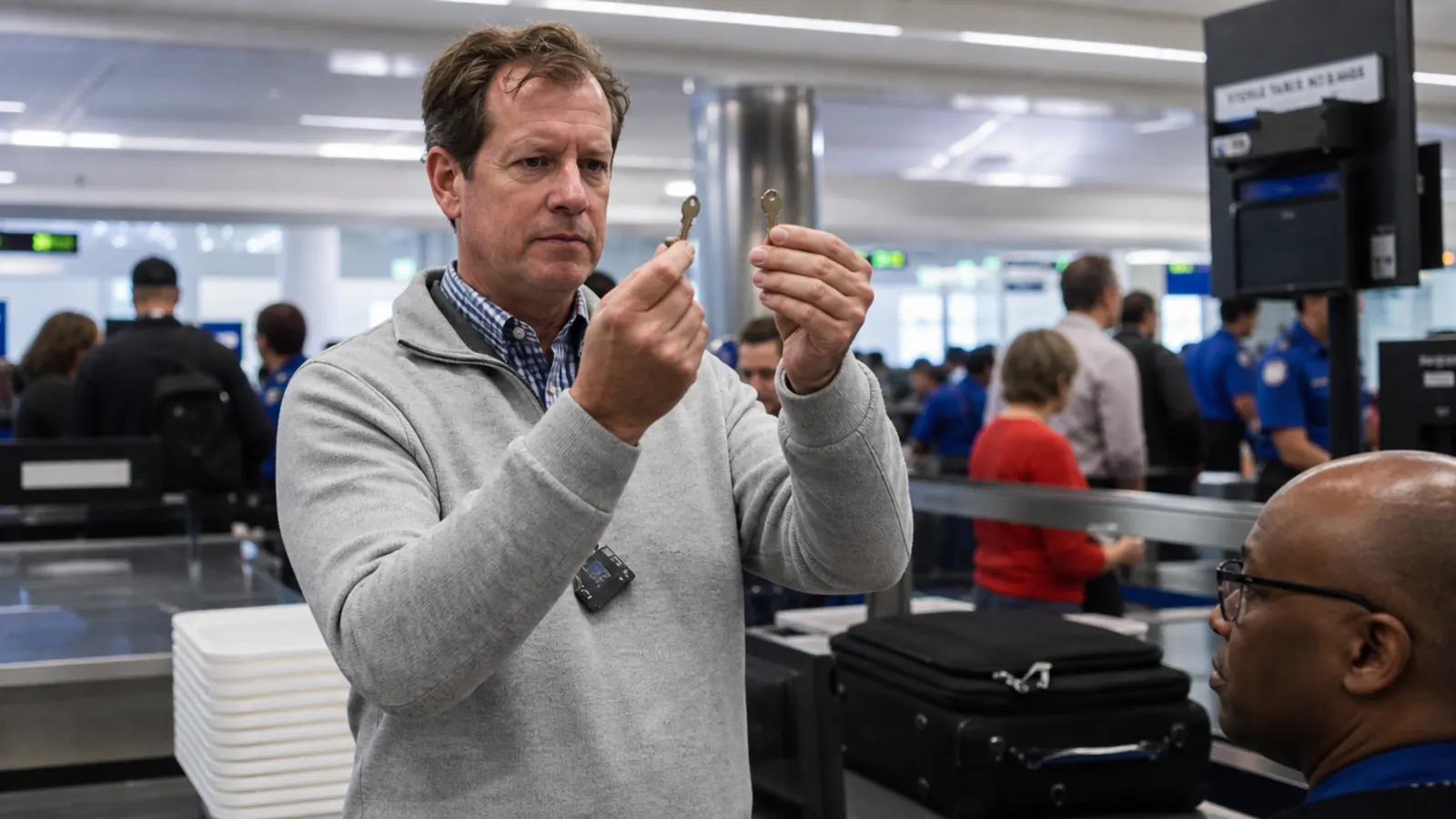
Here's the thing nobody mentions in the glowing five-star reviews for the Master Lock 4689T two-pack: the two locks in the box aren't keyed alike. I didn't know that going in, and I found out the hard way at a security line in Nashville, holding two nearly identical little keys, trying each one on the wrong lock while a line of people waited behind me. It's a small thing. It's also exactly the kind of small thing that decides whether a product earns a place in your bag long term, and it's the first thing I want you to know before you buy this.
I'm Dale Whitaker, and I've now put the Master Lock 4689T TSA-approved keyed lock through fifteen trips over the better part of a year, mostly flying to see my son Mark in Nashville and my daughter Julie in Denver, with my wife Linda along for most of it. This isn't a review written after unboxing it and clipping it on once. This is what happened after fifteen real trips, including the annoying parts, because a review that only tells you the good stuff isn't worth reading.
The Quick Verdict
A dependable, no-nonsense keyed TSA lock with one real annoyance the listing doesn't warn you about: the two locks aren't keyed alike. Once you know that going in and pack accordingly, it's earned its spot in my bag for fifteen trips running.
Amazon Check Today's Price →The One Detail About This Lock Amazon's Star Rating Won't Tell You
A four-and-a-half star average doesn't tell you the two locks in this pack use separate keys, or how to keep that from turning into a headache at a checkpoint. I'll walk you through exactly how I keep it from being a problem, and where this lock genuinely earns its keep.
Amazon Check Today's Price on Amazon →How I've Used It
Fifteen trips sounds like a lot until you break it down. A handful were quick weekend runs to Nashville to see Mark and help him with a new house, a couple were longer trips out to Denver for Julie's graduation and a visit the following fall, and one was a work conference in St. Louis where I checked a bag for the first time in years because I needed room for a suit bag and a box of samples. Different airports, different airlines, different TSA lines, which is really the only way to get an honest read on a piece of gear like this.
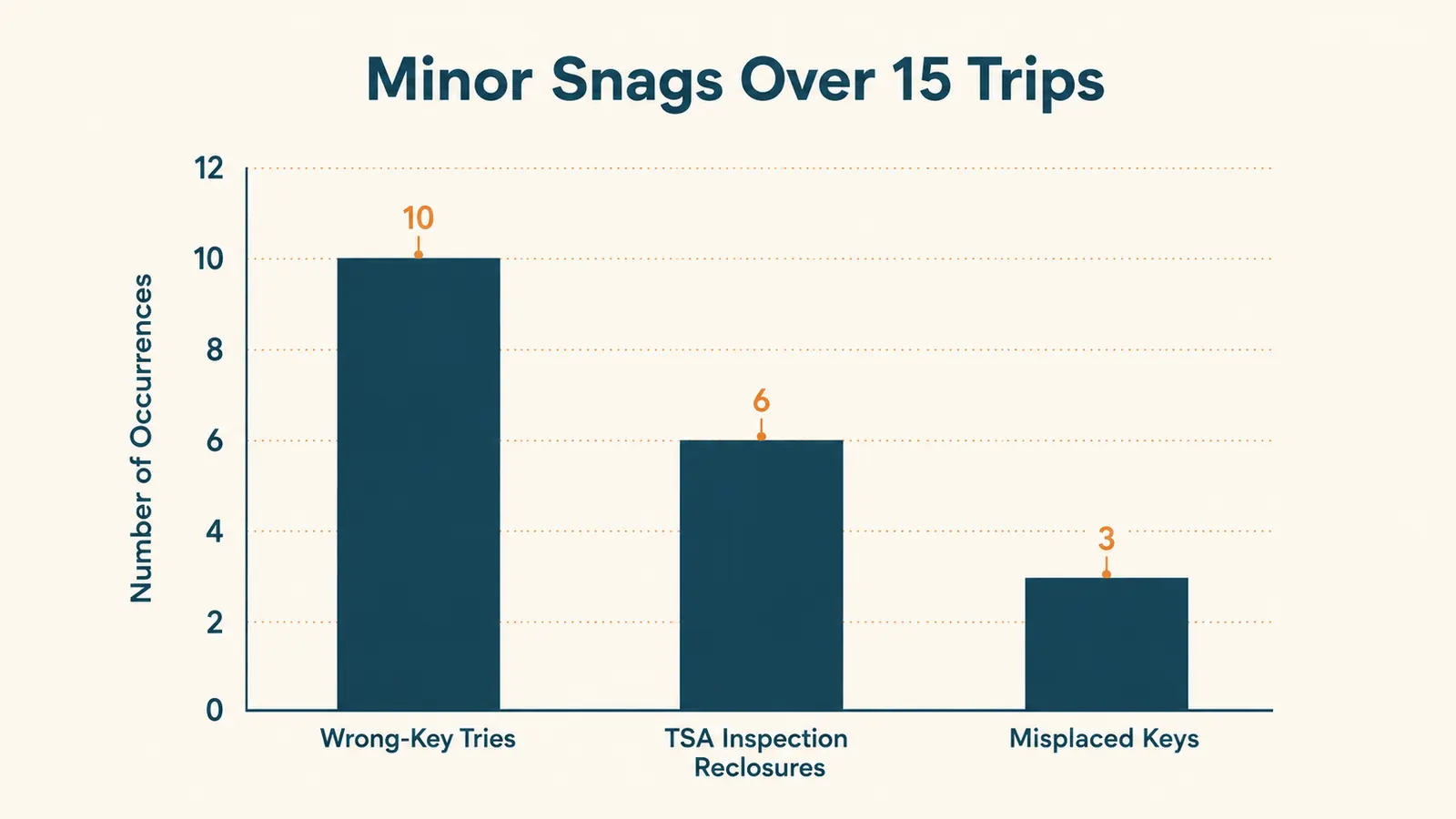
The lock itself works exactly how you'd expect. You feed the shackle through both zipper pulls, push it into the body until you hear the click, and you're done. No combination to set, nothing to remember at five in the morning before a flight. My bag got pulled for a hand inspection twice this year, once flying out of St. Louis and once coming back through Denver, and both times TSA used their master key, checked the bag, and relocked it with the little inspection notice tucked inside. That part of the system works exactly the way it's supposed to.
Where it stopped being simple was managing two locks that don't share a key. I lock the main compartment with one lock and the smaller front pocket with the other, which means I'm carrying two different keys, not one key for both. The first few trips I didn't think much about it, until that morning in Nashville when I grabbed the wrong key out of my pocket and spent a solid thirty seconds fumbling at a lock that wasn't going to open no matter how hard I jammed it in.
One trip stands out more than the rest. Linda and I had a red-eye connection through Denver on the way back from Julie's, running maybe twelve minutes to the next gate after landing, and I still stopped to lock both zippers before we handed the bag off at the counter. It cost us less than a minute total, but I remember thinking how easy it would have been to skip it under time pressure, and how that's exactly the moment a lock like this earns its keep, not on the easy trips but on the rushed ones.
The Part Nobody Tells You About a Keyed Lock
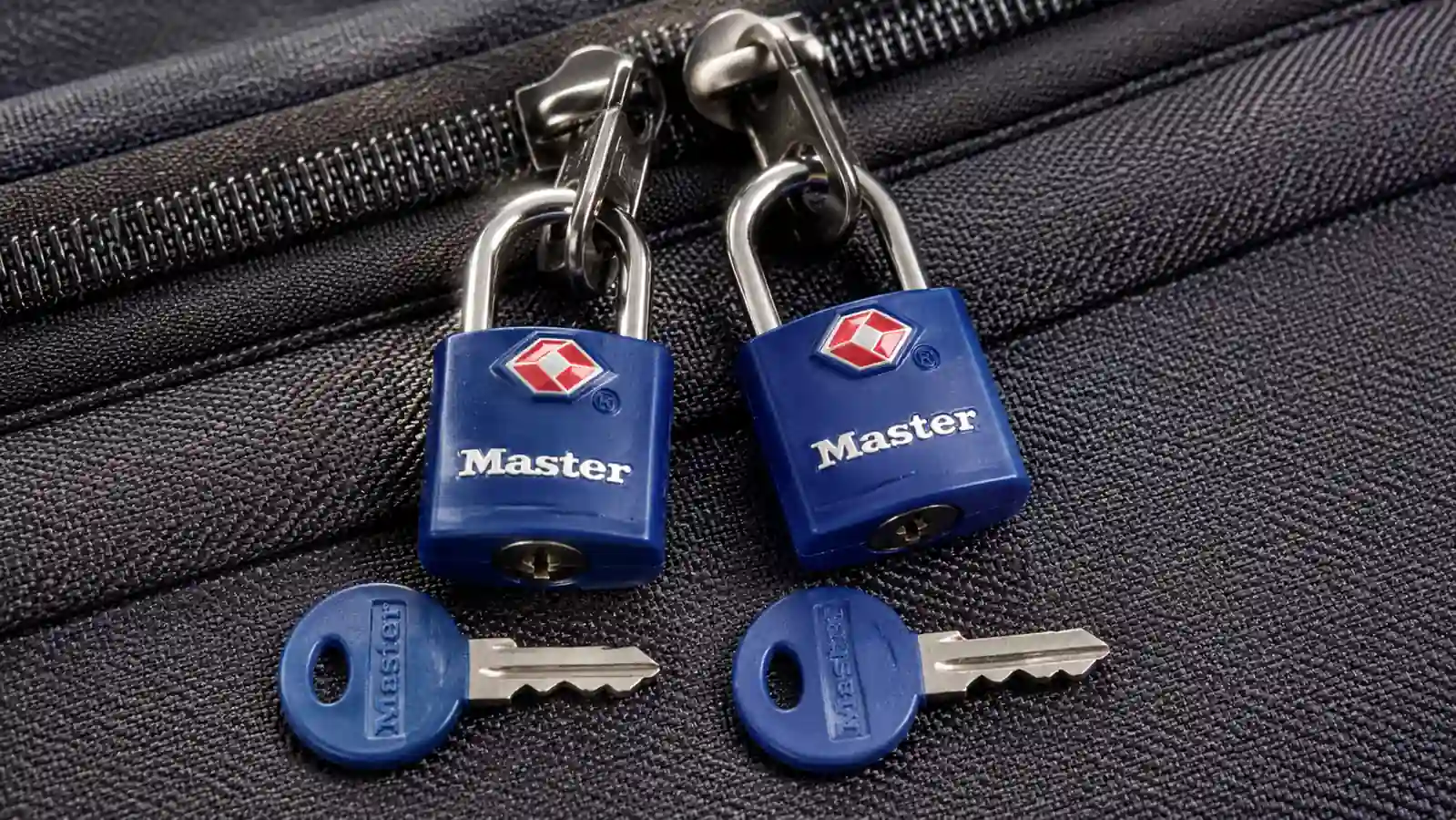
Most of the reviews I read before buying this focused on the shrouded shackle and the TSA-approved stamp, which are both real strengths, but nobody flagged the keyed-differently issue. Once I noticed it, I started tagging my keys with a small piece of colored tape, one dab of red for the main compartment, one dab of blue for the front pocket, so I'm not guessing at a checkpoint anymore. It's a two-minute fix, but it's a fix you shouldn't have to figure out yourself after the fact.
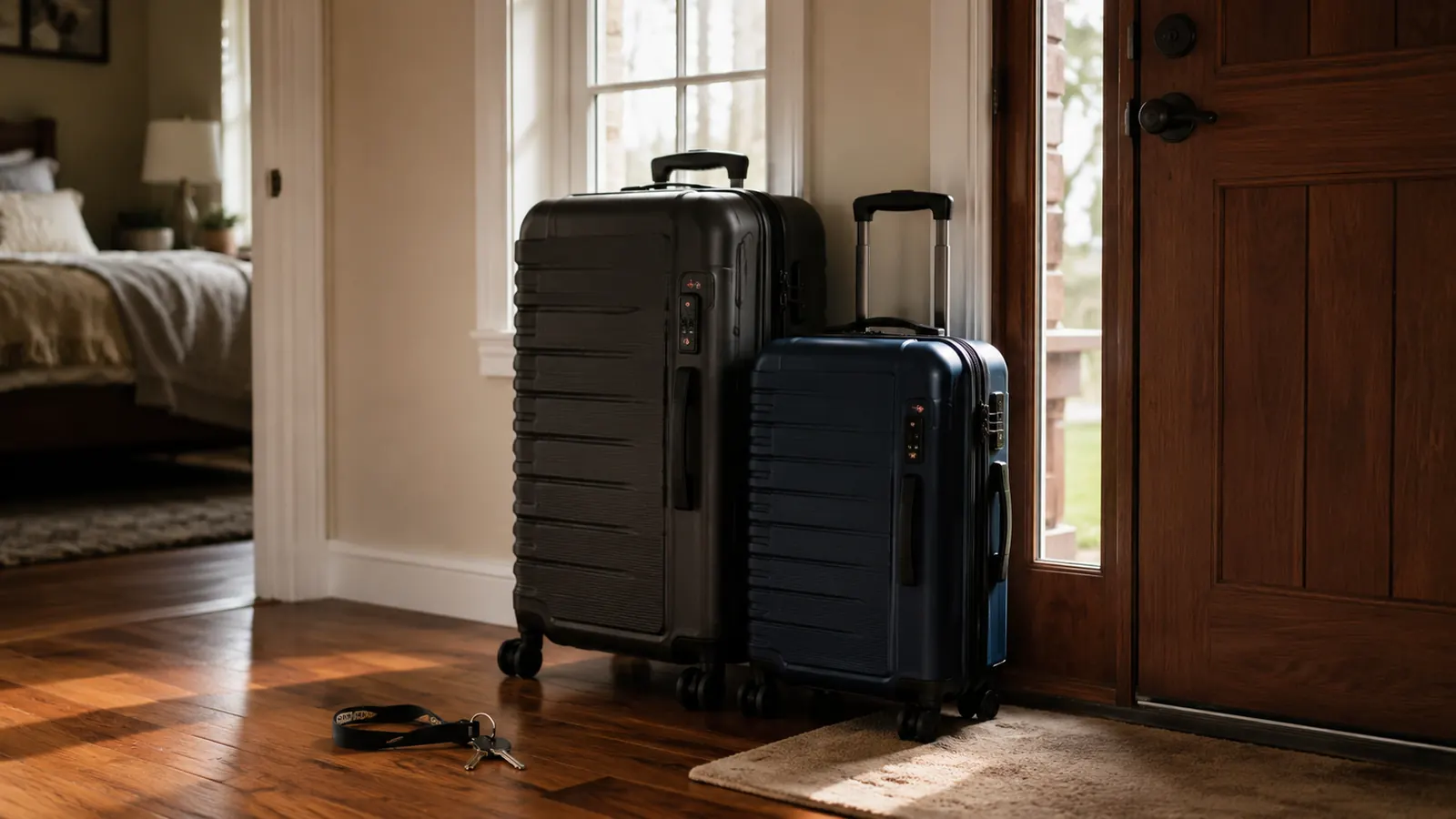
The bigger issue underneath that one is just what it means to commit to a keyed lock at all. A key is a physical object you have to remember, pack somewhere findable, and not lose, and that's a real ask for a lot of travelers. I keep one full set on my own keyring and Linda keeps a duplicate set clipped inside her carry-on, which has saved us more than once. If you're the kind of person who's already lost a house key or a car fob this year, read that as a genuine warning, not a throwaway line. For a full breakdown of how the two-key, two-lock system compares to a dial-based option, our Master Lock vs Sure Lock comparison lays out both approaches side by side.
What It Actually Stops, and What It Doesn't
I want to be straight with you here, because I've read reviews on other sites that make a TSA lock sound like it turns your suitcase into a safe. It doesn't. Anyone determined enough to get into a soft-side bag can run a knife or a pair of scissors along the zipper track and bypass the lock entirely without ever touching it. That's true of this lock, it's true of every TSA-approved lock on the market, and if a product page tells you otherwise, they're not being honest with you.
What this lock realistically does is add friction against the low-effort stuff, the zipper someone tries to nudge open at a crowded carousel while you're distracted, or the opportunistic tug from someone who's just checking if a bag is unlocked. That's the overwhelming majority of what actually happens to checked luggage, and on that front the lock has done its job for fifteen straight trips with nothing missing, nothing tampered with, and no cut shackles. For a longer list of what a lock like this genuinely buys you, I laid it all out in 10 reasons TSA luggage locks protect your bags.
I'll also say this plainly, because it matters more than most reviews let on: I never check anything genuinely valuable, locked bag or not, and neither should you. Jewelry, electronics I actually care about, important documents, all of that rides in the carry-on with me regardless of what's on the zippers. A lock is peace of mind for the ordinary stuff, clothes, toiletries, gifts, not an insurance policy, and treating it like one is where people get burned.
Fifteen Trips of Wear, No Sugarcoating
The mechanical side has held up fine. Both locks still click shut with the same firmness they had out of the box, and neither key has started grinding or sticking, even after a humid trip through St. Louis in August where I half expected the keyhole to get gummy. That didn't happen. What I have noticed is that the keyway on the lock I use most, the one on the main compartment, feels a hair looser around the key than the front-pocket lock that sees less use, which tracks with how many more times it's been turned this year.
I also noticed the two locks in my pack get handled differently depending on how the bag is checked. When I've gate-checked a bag at the jet bridge instead of the ticket counter, the lock takes more of a beating, more scuffing on the body, a couple of small dings on the shackle housing from being tossed onto a cart with other bags. Counter-checked bags that ride the belt system come back looking cleaner. Neither method has come close to cracking the lock body or bending the shackle, but if you gate-check often, expect your lock to show its age faster than mine did on counter-checked flights alone.
What I'd Change If Master Lock Asked Me
If someone from Master Lock ever asked for feedback, the keyed-alike issue would be the first thing I'd bring up. Selling a two-pack for a single bag's two zippers practically assumes the buyer wants one key that does both jobs, and a lot of buyers probably think that's what they're getting unless they read the fine print closely, which most people don't do on a small hardware purchase like this. A version of this exact lock sold specifically as keyed alike would solve the whole problem without changing anything else about it.
The second thing I'd ask for is a small keychain tag or a printed reminder tucked in the packaging, something as simple as a card that says 'these two locks use different keys, mark them before your first trip.' It's a cheap fix that would have saved me that fumbling moment in Nashville. Neither of these is a reason to skip the lock, but they're the kind of small, fixable annoyances that separate a good product from a genuinely great one, and I'd rather tell you now than let you find out at a checkpoint.
Alternatives I Considered
Before I settled on this two-pack, I looked hard at a combination-style lock instead, mainly because I liked the idea of not carrying a physical key at all. What talked me out of it was Linda's track record with remembering codes versus mine with remembering where I put a key. We're both more reliable with a key in a known pocket than a four-digit combination we set once and might blank on eight months later at six in the morning.
If you're weighing the same decision, it really comes down to which failure mode you trust yourself less to avoid, losing a key or forgetting a code. I put together a direct comparison between this Master Lock and a combination-style Sure Lock option, covering price, ease of resetting, and how each one holds up over time, over in Master Lock vs Sure Lock, and if you want the step-by-step on getting a lock like this onto your bag correctly in the first place, I walked through that in how to secure checked luggage with a TSA lock.
What I Liked
- Shrouded shackle holds up to fifteen trips of real handling without a scratch to its function
- TSA's master key opens it clean for inspections, no cut locks waiting at baggage claim
- Compact enough that two locks barely register in a packed carry-on
- Mechanically solid a year in, both keys still turn without grinding
- Cheap enough that losing one key doesn't sting, the second lock still protects the other zipper
Where It Falls Short
- The two locks in the pack are keyed differently, not keyed alike, and nothing on the listing warns you
- Requires carrying and tracking physical keys, a real liability if you tend to misplace small things
- Cosmetic wear shows up faster on gate-checked bags than counter-checked ones
- Won't stop anyone willing to cut the zipper fabric instead of picking the lock
- Colors are randomly assigned, so you can't match or coordinate a set on purpose
Nobody warns you the two locks in the box don't share a key. That's a two-minute fix once you know it's coming, but you shouldn't have to find out at a checkpoint like I did.
Who This Is For
If you check bags regularly, don't mind carrying a couple of small keys, and want something that just works without a combination to remember, this two-pack earns its keep. It's especially solid for a family or a couple splitting locks between two bags, since a two-pack gives you enough coverage without buying a third or fourth lock separately. Anyone who's had a zipper tugged open before and just wants that particular worry handled will get real value out of it.
Who Should Skip It
If you already know you'll lose track of a small key on a multi-leg trip, or you specifically want one lock system that works the same way across every bag in the house, skip this and go with a combination lock instead, ideally one where you can set the same code on multiple units. And if you're buying any TSA lock expecting it to actually secure valuables inside a checked bag, that's not what this product, or anything in this category, is built to do. For the long-term angle on how this same lock held up over a full year of flying, see our year-on-the-road review.
Now You Know the One Catch. Here's Why I'm Still Buying the Two-Pack Again
Two keys instead of one isn't a dealbreaker once you know to expect it, and fifteen trips in, this lock hasn't let me down on the part that actually matters, keeping the zippers closed. Tag your keys, keep a spare with someone you trust, and it'll do its job.
Amazon Check Today's Price on Amazon →