
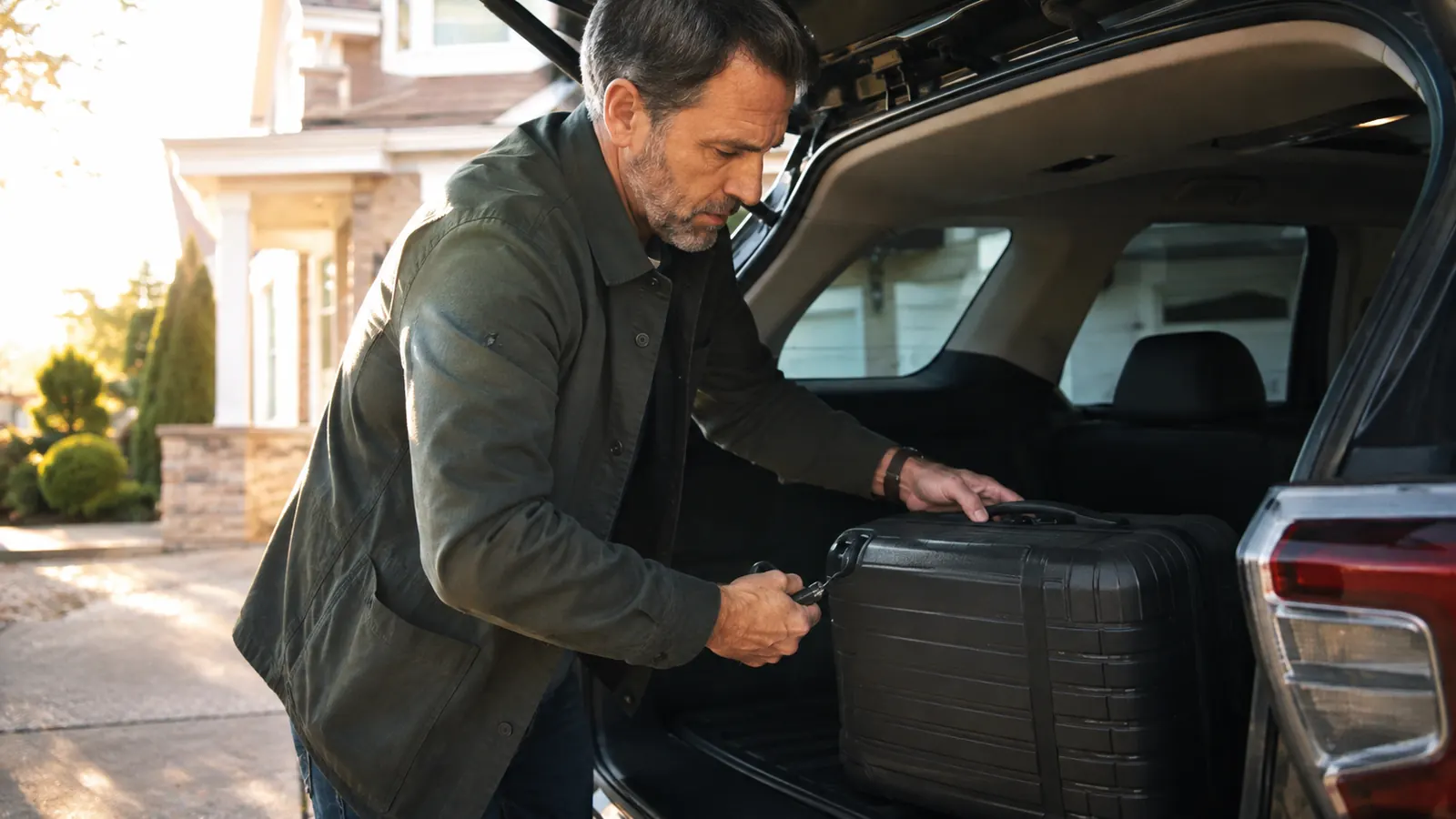
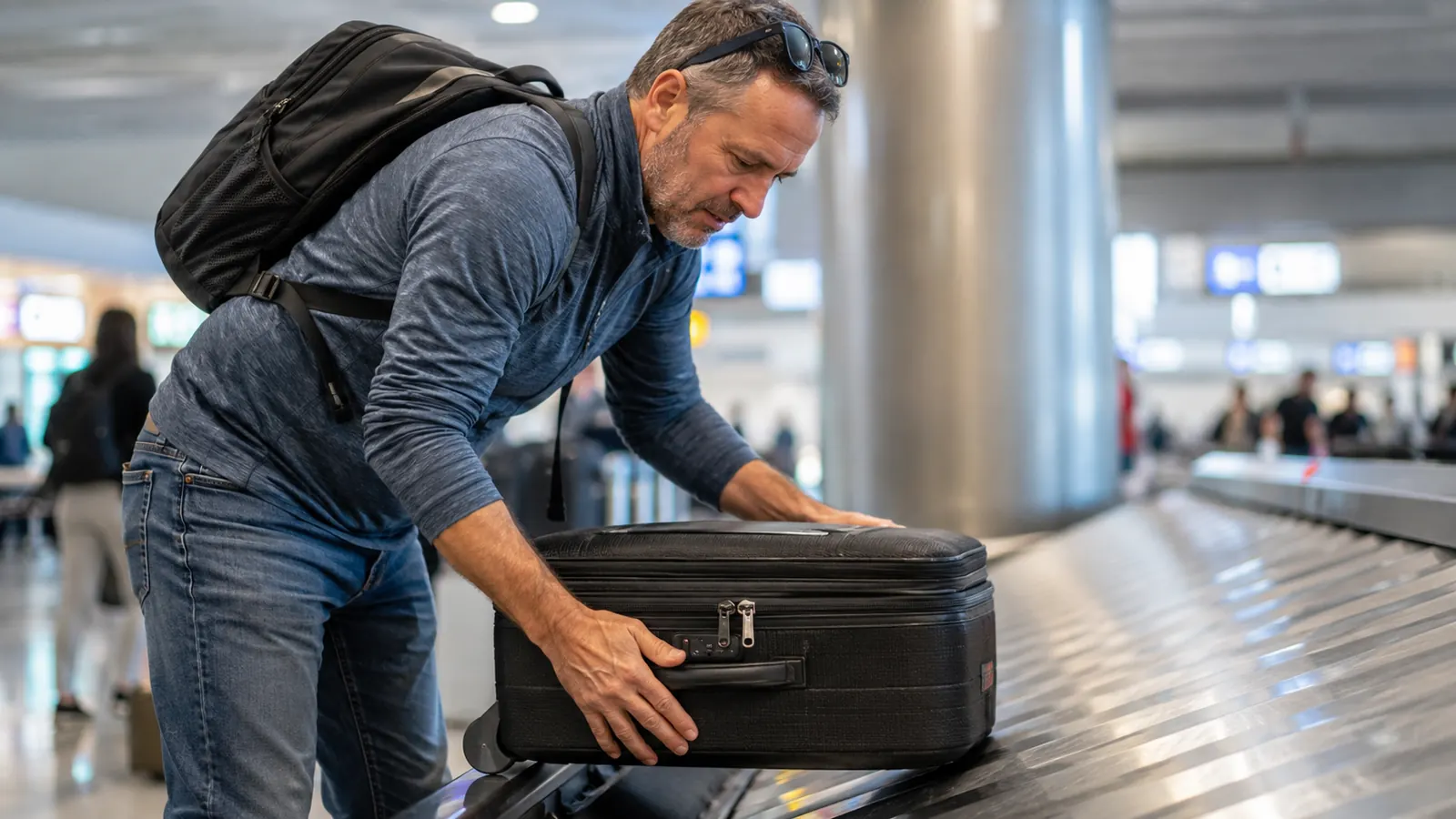
I didn't start locking my checked bags because I got robbed. I started because I watched a guy at the Nashville baggage carousel pop his suitcase open by accident when the zipper pull caught on the belt, and half his clothes rode around the carousel twice before he could grab them. That stuck with me. A bag that pops open isn't just embarrassing, it's your stuff scattered in front of a hundred strangers, and it's a problem you can prevent for less trouble than tying your shoes.
A TSA lock won't stop a thief who's dead set on getting into your bag. Nothing short of welding it shut will do that, and even then someone would find a way. What a luggage lock actually does is simpler and more useful for most travelers: it keeps the zipper pulls from separating on their own, it discourages the casual zipper-diver walking a baggage claim looking for an easy grab, and it keeps your bag closed the way you packed it. That's the honest pitch, and it's still worth doing.
I've flown enough with Linda over the years, plus trips out to see Mark in Nashville and Julie in Denver, that I've seen just about every way a checked bag can go sideways. Locking it doesn't fix all of them. It fixes the ones that are actually preventable, and it takes about four seconds. Here's how to do it right, step by step.
Skip the guesswork. Here's the lock I actually pack.
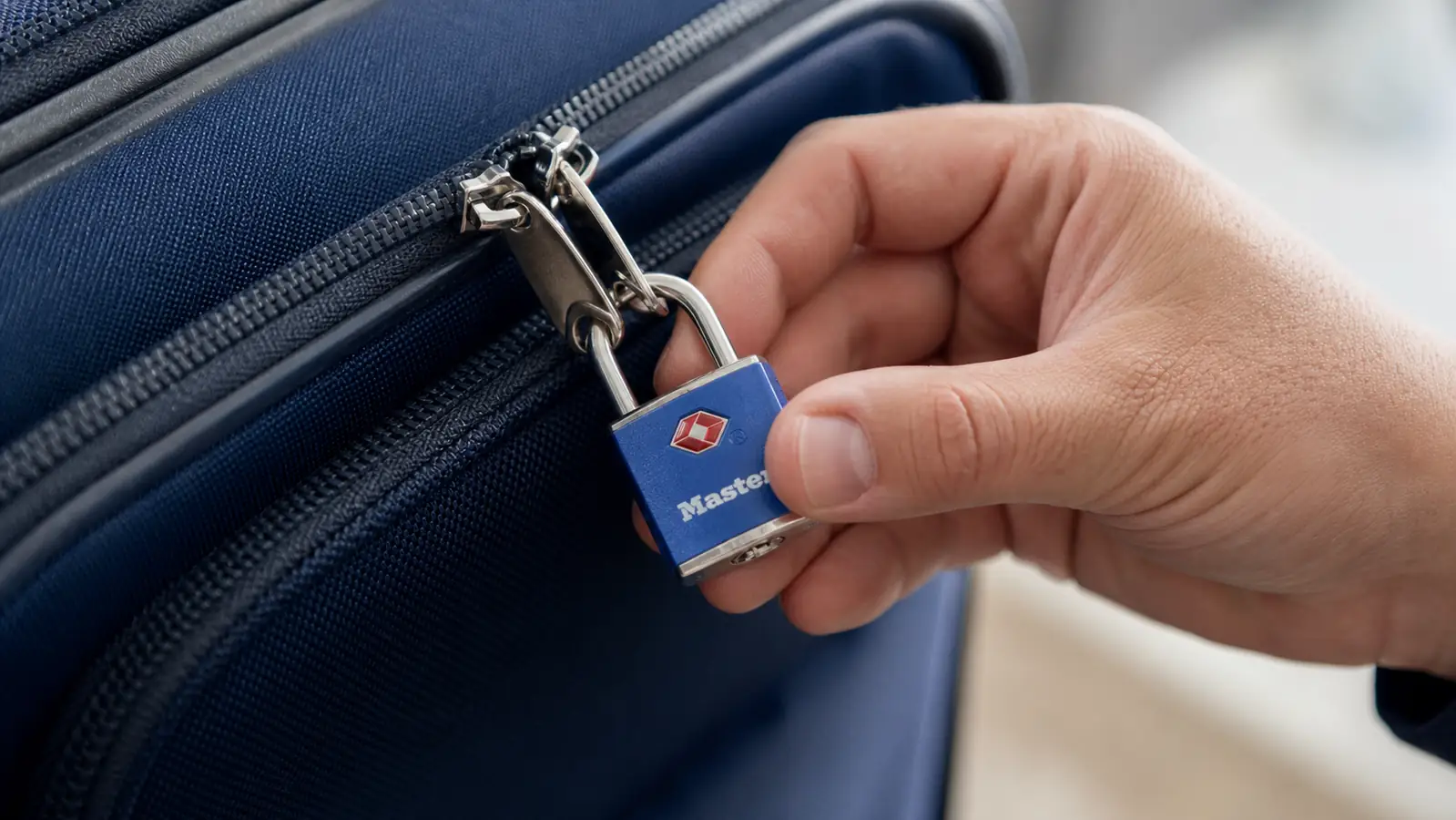
The Master Lock 4689T is TSA-accepted, sold as a two pack so you've always got a spare, and it's the one Linda and I have used on every checked bag for the better part of a year.
Amazon Check Today's Price on Amazon →Step 1: Buy a Lock That's Actually TSA-Accepted
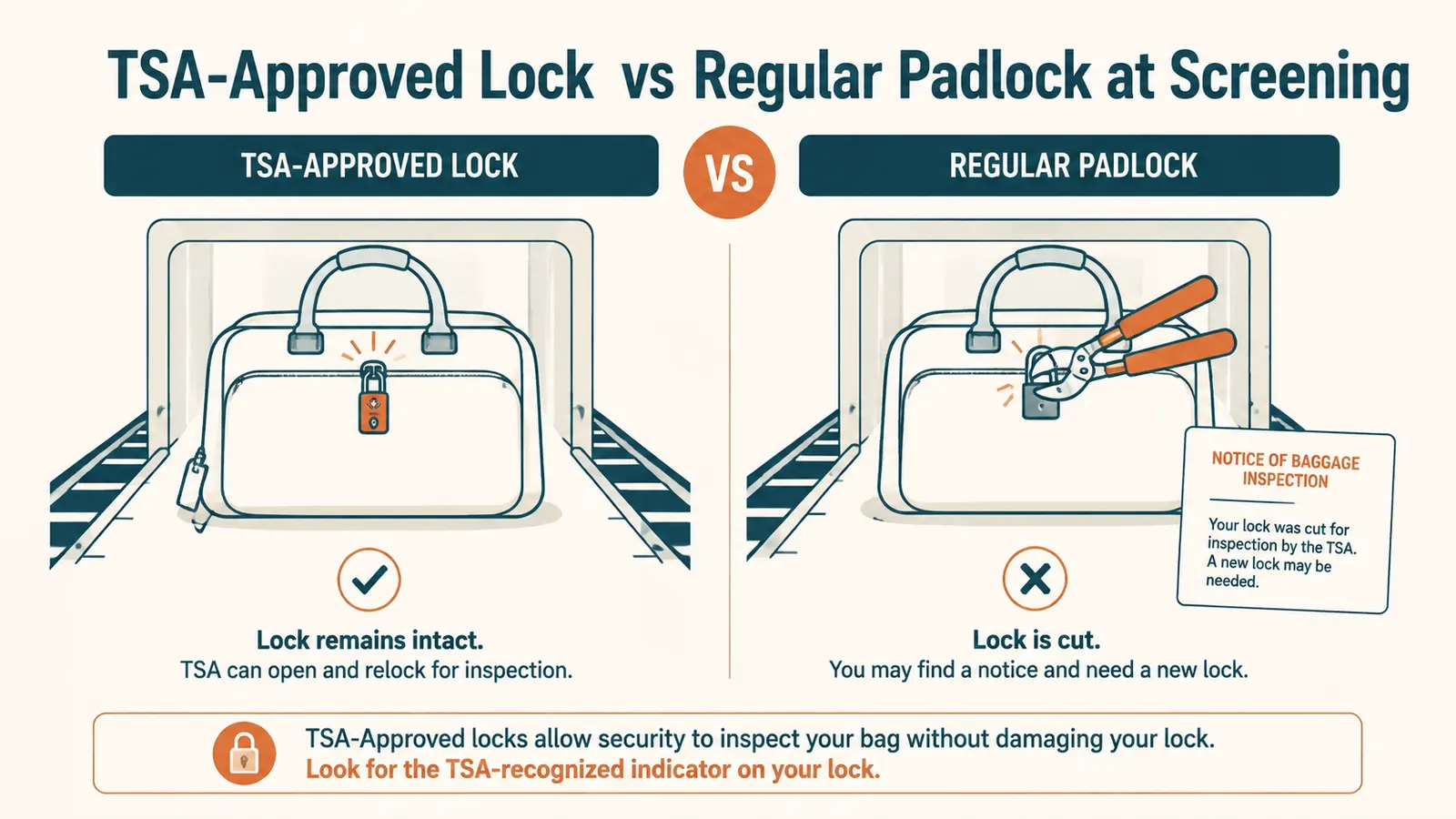
This is the step people skip and regret. Not every padlock with 'travel' on the packaging is TSA-accepted. The real ones carry a small red diamond logo, the Travel Sentry mark, that tells a TSA officer this lock has a master key that fits their toolkit. If your lock doesn't have that mark, and your bag gets pulled for a hand search, the officer isn't going to hunt around for a way in. They'll cut it off, and you'll be buying a new lock at your destination instead of using the one you packed.
The Master Lock 4689T carries that Travel Sentry mark. It's a small keyed lock, not a combination dial, which matters more than it sounds like. Combination locks are fine until you're standing in a hotel lobby in Denver at 11pm trying to remember a four-digit code you set six months ago. My daughter Julie went through that exact scene visiting us over the holidays, standing there punching in guesses while the front desk clerk waited. A key is simpler. You either have it or you don't, and you know which one within about two seconds.
Look for that Travel Sentry diamond on the packaging before you buy anything, no matter which brand you land on. It's a small detail that decides whether your lock survives a routine bag check or gets cut off in a back room you never see. Build quality matters too. A lock that's held together with cheap pot metal will seize up after a couple months of being tossed around in a suitcase pocket, and a lock you can't turn is worse than no lock at all.
Step 2: Match the Lock to Your Zipper Pulls
Before you lock anything, look at how your bag actually closes. Most soft-sided checked luggage has two zipper pulls that meet in the middle or at a corner, each with a small hole for exactly this purpose. Hard-shell cases sometimes have a single zipper track with pulls that meet near the handle, and some have a built-in TSA combination lock already, in which case a separate luggage lock is optional backup rather than a requirement.
The 4689T's shackle is sized to fit through two zipper pulls with room to spare, which is the standard setup on most checked bags, duffels, and even some backpacks. If your bag has thick nylon straps or a single pull with no partner hole, a keyed lock like this one may not be the right fit and you're better off with a cable-style lock instead. Check this before you travel, not at 5am on departure day with a car idling in the driveway.
While you're checking the fit, take a look at the zipper pull holes themselves. On an older bag that's been through a few years of trips, those holes can wear larger or the fabric around them can fray. A lock still works fine in a worn hole, but if the fabric itself is tearing, no lock is going to save that bag much longer. That's a sign to start looking at a replacement suitcase, not a stronger lock.
Step 3: Loop the Lock Through Both Zipper Pulls, Not Just One
This sounds obvious until you watch someone do it wrong. Locking only one zipper pull to the bag's strap or handle does basically nothing, because the other pull is still free to slide the zipper open from the opposite direction. The whole point of a luggage lock is to physically bind both pulls together so the zipper track can't separate at all.
Thread the shackle through both holes, close it, and give the zipper a firm tug in both directions to confirm it's actually locked and not just resting closed. I do this every single time now, out of habit more than worry, the same way I check the stove before we leave the house. Takes four seconds. For a full rundown of why this small habit matters more than people think, our piece on why TSA luggage locks protect your bags covers the rest of the reasoning.
If your bag has three or four zipper pulls instead of two, because it opens in more than one spot, lock the main compartment first. That's the one carrying anything worth protecting. A second lock on a smaller front pocket is a nice extra but not worth stressing over if you're traveling light.
Step 4: Keep the Spare Key With You, Not In the Bag
The 4689T comes two to a pack, and that's not just a bulk discount, it's built-in redundancy. Put one key on your keyring and the second in a separate spot, like a jacket pocket or your carry-on's front pouch. Never put the spare in the checked bag itself. I made that mistake once early on and locked my own key inside a suitcase in a Phoenix hotel room. Housekeeping had to call the front desk, the front desk called maintenance, and I lost forty-five minutes I didn't have before an evening flight.
If you do lose both keys, you're not stuck. The 4689T can be cut with standard bolt cutters the same as any other lock, and a locksmith or hardware store can usually handle it in a few minutes. It's not fun, but it's not a disaster either. That's part of being honest about what this lock is: a deterrent and a convenience, not a vault.
Step 5: Know What a TSA Lock Actually Protects, and What It Doesn't
Here's the part most product pages skip over. A TSA-accepted luggage lock means TSA officers can open it with their own master key without cutting it off, so your bag can be searched and still arrive locked. That's the entire mechanism. It does not mean the lock is uncrackable, and it does not mean your bag is theft-proof. A determined thief with a pair of cutters can get through the lock, or just through the zipper fabric itself, in under a minute regardless of what you've hung on it.
What a lock like this actually buys you is protection against the casual stuff: zippers popping open on the carousel, a curious hand testing an unlocked bag while it sits unattended, a zipper pull snagging on a conveyor belt. That's real value, I've seen it prevent exactly that scene in Nashville I mentioned earlier. But it's not a reason to pack anything you can't afford to lose. Keep your medication, electronics, jewelry, and anything irreplaceable in your carry-on, always. A locked checked bag is still a checked bag, and checked bags occasionally go missing entirely with or without a lock on them.
I tell people this plainly because I'd rather set the right expectation than sell false comfort. A lock buys you peace of mind about the ordinary stuff that actually happens most trips. It doesn't buy you a guarantee, and nobody selling one honestly should tell you otherwise.
What Else Helps
A lock is one piece of a bigger habit, not the whole system. I clip a bright orange luggage strap around our bags now too, partly so Linda can spot them fast at baggage claim and partly because a strap adds one more layer between a stranger and your zipper. A small Bluetooth tracker tucked in a side pocket has saved us twice when a connection in Atlanta sent our bags to the wrong carousel entirely. And if you're checking a bag with packing cubes inside, keeping things organized means you notice fast if anything's been moved, which is its own kind of security.
At the hotel end, the same logic applies. A locked suitcase left in a hotel room isn't as safe as a room safe, so anything you'd hate to lose belongs in the safe, not zipped inside a locked bag sitting on a rack. I use the lock for the trip itself, carousel to car to hotel room door, and switch to the safe once we're settled. Two different tools for two different moments, not one lock doing everything.
If you haven't seen how that setup works, packing with cubes is worth a read even if you're using them in a checked bag rather than a carry-on. None of these habits replace the lock. They stack with it, and together they cover a lot more ground than any single fix on its own.
A TSA lock won't stop a thief who really wants in. What it stops is the easy stuff, the accidents and the casual grab, and for most of us that's most of what actually happens.
I still remember the trip that changed how seriously I took this. We landed back in Nashville visiting Mark, grabbed our bags off the carousel, and one of Julie's suitcases had a zipper pull hanging wide open, unlocked, everything visible to anyone walking by. Nothing was taken that time. But it was close enough that I bought a two pack of locks before we left the airport parking garage, and I've used one on every checked bag since. If you want the full story of how that scare played out, I wrote it up in the baggage claim scare that made me start locking my bags. It's a small habit that costs you almost nothing and covers a real gap.
One more thing worth knowing before you buy: not every TSA-accepted lock is built the same, and the market's full of flimsy versions that carry the logo but fall apart after a few trips. We put the Master Lock 4689T up against a competitor directly in Master Lock vs Sure Lock, if you want to see how they actually compare side by side before you decide.
Lock it once, stop thinking about it for the rest of the trip.
Grab the same two-pack Linda and I keep in our travel bag drawer. TSA-accepted, keyed, no combination to forget at 11pm in a hotel lobby.
Amazon Check Today's Price on Amazon →