
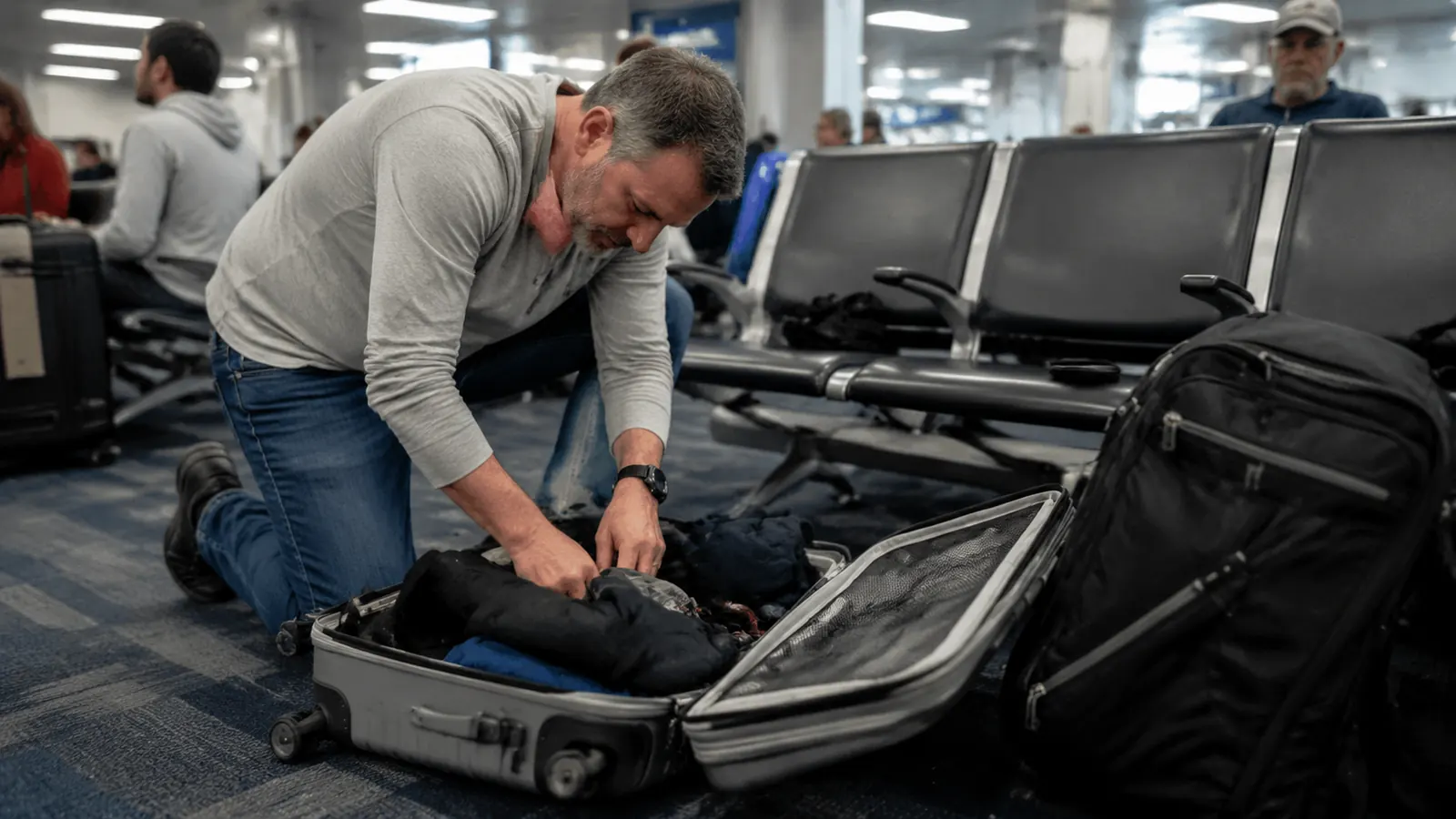
I've missed exactly one connection in my life, and it wasn't because the plane was late. It was because I was still shoving socks into the side pocket of my suitcase when the gate agent called my name over the intercom for the third time. That was Denver, a 47-minute layover that should have been plenty, and a duffel bag that had exploded somewhere between the rental car return and security. I sprinted, I made it, and I sat down in seat 14C sweating through my shirt and telling myself I'd figure out a better system before the next trip.
I didn't. Not right away. I told myself the problem was the airport, or the tight layover, or the fact that I'd overpacked. It took two more trips of the same story, a wrinkled dress shirt at a client dinner in Nashville and a lost phone charger buried somewhere in a mountain of loose clothes in Tampa, before I admitted the problem was how I was packing, not where I was flying to.
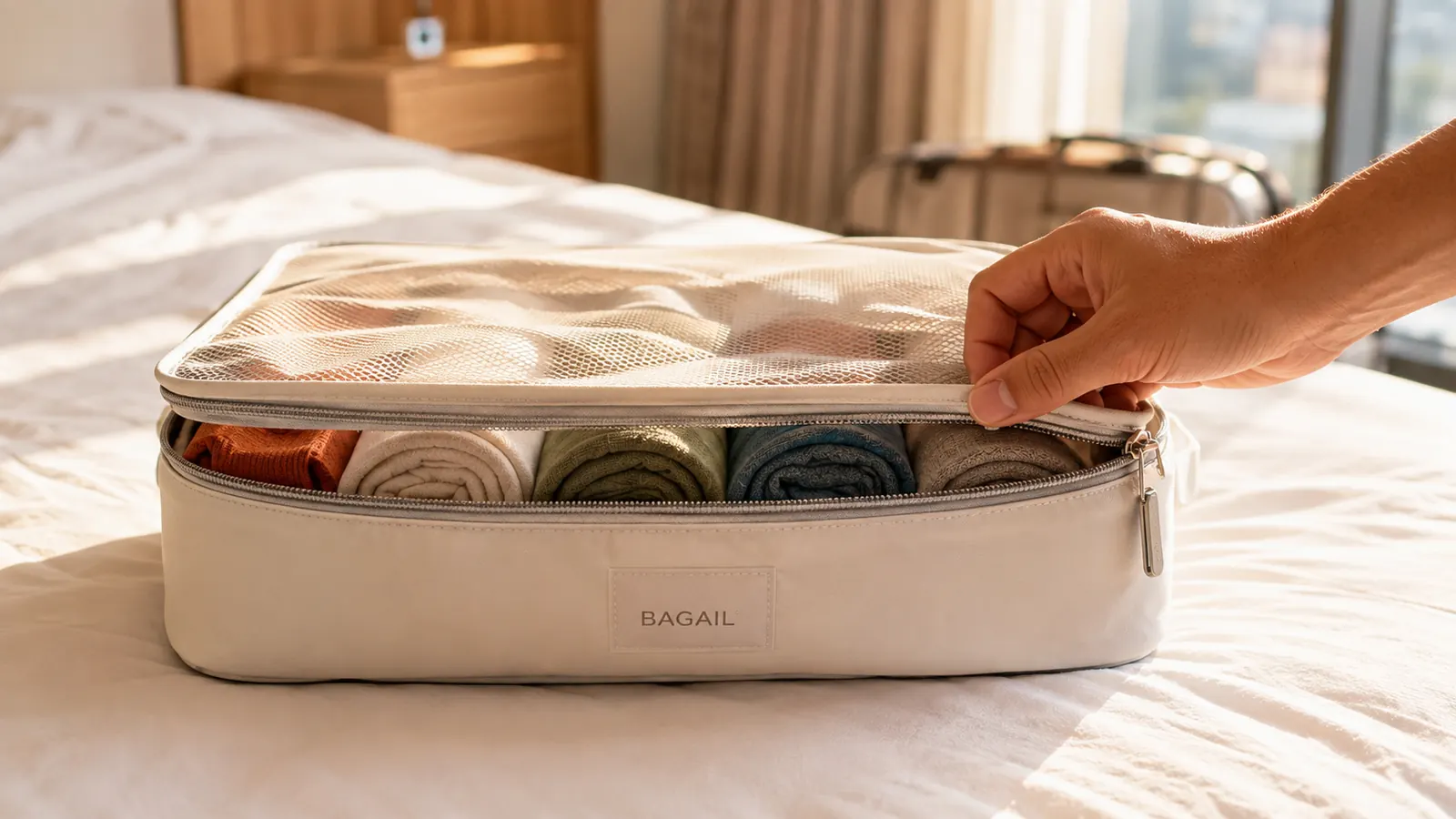
My wife Linda had been using packing cubes for years and kept telling me to just try them. I brushed it off. Zippered fabric boxes felt like one more thing to fuss with, and I already had enough gear rattling around in my bag. But after Tampa, I gave in and ordered the BAGAIL 8-set she'd been using, the cream-colored ones with the mesh tops. Cheap enough that I figured I could afford to be wrong, nothing fancy, just six cubes plus a couple of pouches for the small stuff.
I wasn't looking for a system. I was looking to never sprint through an airport in a sweat-soaked shirt again.
Stop dumping your suitcase to find one shirt
The BAGAIL set is what turned my packing from a gamble into a five-minute routine. Every cube holds one category, everything stays where I put it.
Amazon Check Today's Price on Amazon →The first pack was almost embarrassing in how simple it was. One cube for shirts, rolled not folded. One for underwear and socks. One for the gym clothes I never used to bring because they always got tangled with everything else. A smaller cube for cables and chargers, which sounds minor until you've spent fifteen minutes at a Marriott front desk asking if anyone turned in a phone brick. Everything zipped flat, everything had a place, and the suitcase closed on the first try for the first time in longer than I could remember.
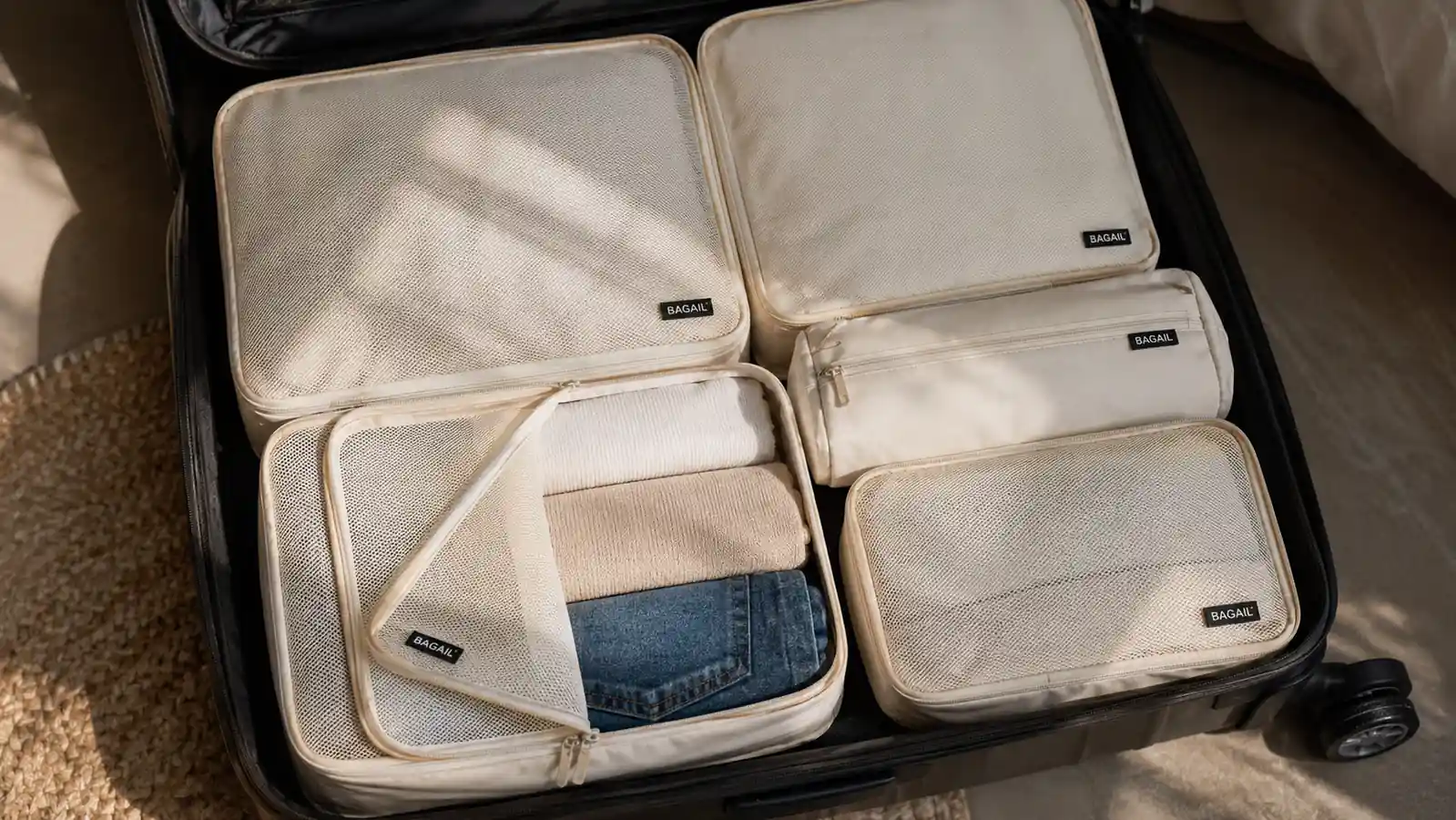
The real test came a month later, back at the same Denver airport, same tight connection, same nerves walking up to security. This time I wasn't repacking anything. My whole bag was six cubes stacked like bricks, and when TSA asked me to open it for a random check, I unzipped, showed them the contents in about four seconds, zipped it back up, and walked to my gate with time to spare. I actually laughed a little, standing there. It was the same airport that had humbled me a year earlier, and this time it was a non-event.
What surprised me wasn't just the organization, it was how much space I got back. Compressing clothes into cubes instead of letting them sprawl loose in the suitcase meant I could fit what used to be a checked bag into a carry-on. I wrote up the specifics on that in this breakdown of how cubes actually save room, because the math genuinely shocked me the first time I measured it. I went from checking a bag on most trips to almost never doing it, which by itself has probably saved me more time standing at baggage carousels than anything else I've changed in how I travel.

I'm not going to tell you the cubes are magic. The mesh tops on the two smallest ones started fraying a little after about eight months of near-weekly use, and if you're the kind of packer who likes to see everything spread out on a hotel bed before you decide what to wear, the compressed-cube approach takes some getting used to. I still unpack the whole set onto the bed most nights anyway, old habits. But the difference is that when I'm done, everything goes back into its own cube instead of getting shuffled into one big pile again.
Linda laughs that it took a missed connection to get me on board with something she'd been telling me for years. Fair enough. If you travel enough, eventually the suitcase teaches you the lesson itself, usually at the worst possible moment. If you'd rather learn it the easy way, I put together a walkthrough of exactly how I pack a carry-on with these now, cube by cube, and I also wrote a straighter-shooting rundown of the pros and cons in this honest review if you want the fuller picture before you buy.
What I'd Tell You If We Were Sitting at My Kitchen Table
If you asked me over coffee whether packing cubes are worth it, I wouldn't give you a sales pitch. I'd tell you about Denver, both times, and let you decide which version of that story you'd rather live. They're not going to make a bad itinerary good, and they won't fix a suitcase that's genuinely too small for the trip. What they fixed for me was the fifteen minutes of chaos before every flight, the moment where you're digging for one thing and dumping everything else on the floor to find it. That's gone now. My bag closes the first time, every time, and that's worth more to me than I expected a set of zippered fabric boxes to be worth.
Pack like the trip already went smoothly
Same BAGAIL set that's been in my carry-on for over a year now. Six cubes, two pouches, one less thing to think about at the gate.
Amazon Check Today's Price on Amazon →