
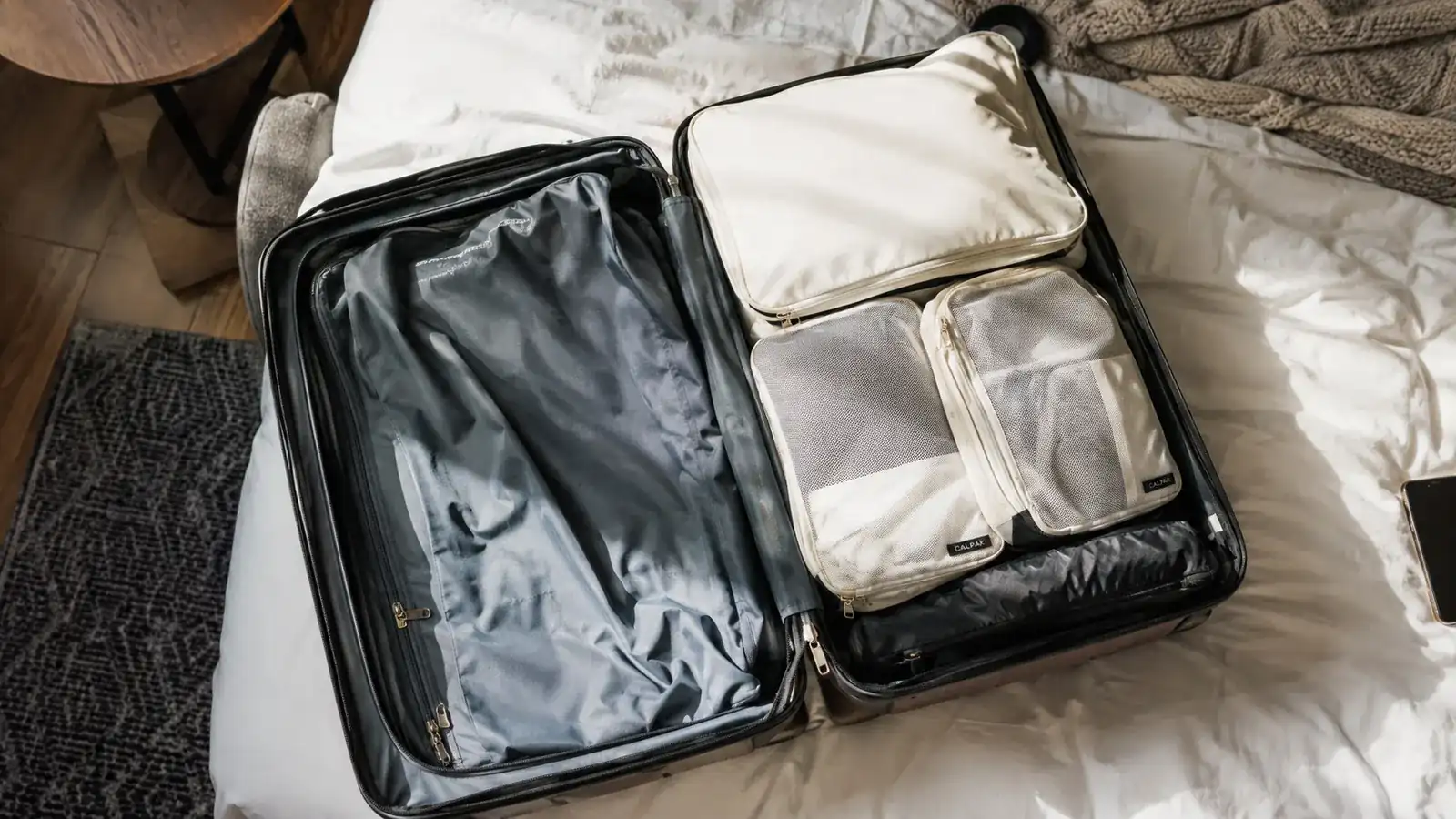
When I'm deciding between packing cubes and compression bags, I don't have to think hard about it anymore. I ran both systems through the same carry-on, packed by the same guy, on six straight trips this spring. A week in Arizona, two long weekends in Nashville, and a ten-day loop through the Blue Ridge for a family reunion. The BAGAIL 8-piece packing cube set won every single time I needed to find something in my bag without dumping the whole thing out on a hotel bed. Compression bags, the roll-and-squeeze kind like the popular Eagle Creek Pack-It Compression Cubes, win exactly one contest, squeezing the most raw volume out of soft, bulky items like sweaters and a winter jacket.
If you already know which problem you're solving, you can stop reading here. If you're not sure, keep going, because the honest answer depends on what kind of packer you are and what you're actually hauling. I'll walk you through what I tested, what the numbers actually looked like, and who each system is really built for.
I'll say this up front so nobody feels misled: this isn't a case where one product is objectively better and the other is junk. Both do exactly what they're designed to do. The question that actually matters is which job you need done, keeping a mixed load of clothes organized and easy to find, or shrinking a small number of bulky items down to fit a tight weight limit. Those are two different jobs, and most travel guides blur them together.
| BAGAIL Packing Cubes | Compression Bags | |
|---|---|---|
| System | BAGAIL 8-Piece Packing Cubes | Roll-Style Compression Bags (e.g. Eagle Creek Pack-It) |
| Today's price range | Lower, one set covers the whole bag | Higher per piece, and you need several |
| Best for | Folded clothes, organized categories, quick access | Bulky soft items like sweaters, jackets, sleeping bags |
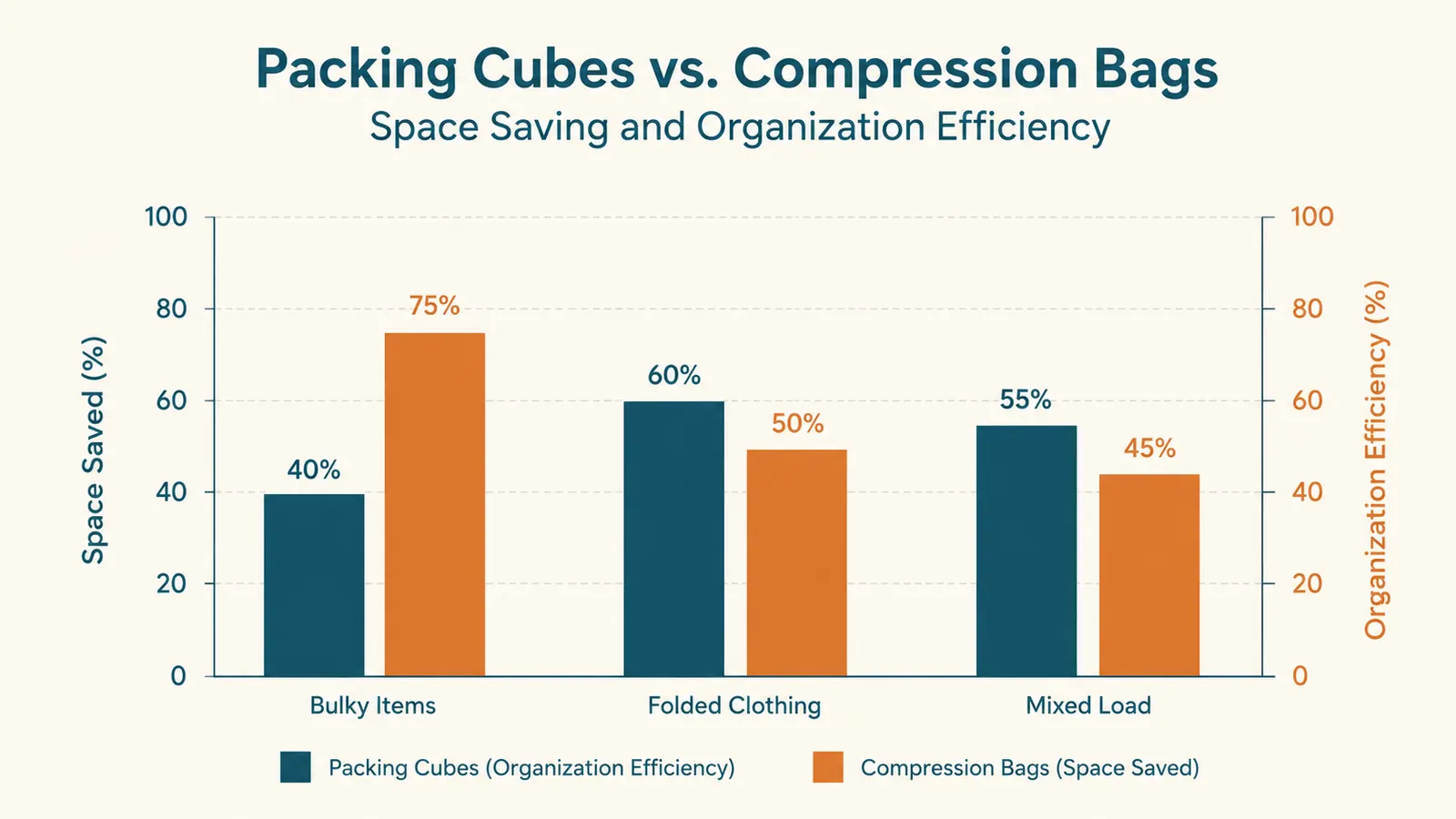
| Space saved on folded shirts | About 20 percent, mostly from tighter stacking | About 10 percent, folded items don't compress much |
| Space saved on bulky items | Minimal, cubes don't compress dense fabric | Up to 40 percent on sweaters and jackets |
| Finding a specific item | Under 10 seconds, unzip the labeled cube | Have to unroll and repack the whole bag |
| Wrinkle control | Good, folded items stay flat inside the cube | Poor, rolling and squeezing creases everything |
| Airport screening friction | Low, cubes read clean on the X-ray belt | Slightly higher, dense rolled bundles sometimes get a second look |
| Long-term durability | 8 months in, zippers and mesh still holding after 20-plus flights | Valve and seams wear out faster with weekly use |
How I Actually Tested This
I didn't just eyeball this. For the Nashville trips I packed the exact same carry-on, a hard-side 22 inch, with the exact same clothes. Five days in the BAGAIL set, five days the next month in a set of roll-style compression bags I borrowed from my brother-in-law. Same shirts, same pair of jeans, same dopp kit riding along separately. I weighed the bag both ways and measured how much empty space was left on top before I had to sit on the lid to zip it.
The numbers were closer than I expected going in. Both packed bags came in around 14 pounds loaded with the same clothes. The difference wasn't weight, it was usable space and how fast I could get back into the bag. The compression bags won on raw squeeze. My winter fleece and one bulky flannel shrank down noticeably once I rolled the bag and pressed the air out through the valve. But the second I needed a specific t-shirt out of the middle of that flattened brick, I was unrolling the whole thing on the bed. With the cubes, I unzipped the "shirts" cube, grabbed what I needed, zipped it back up, done. If you want the full breakdown of what landed in each of the eight cubes on a real trip, I go section by section in my long-term BAGAIL packing cubes review.
I also tracked how long it took to repack after airport security dumped my carry-on for a manual check, which happens to me more than I'd like to admit. With cubes, repacking took under two minutes because everything already had a home. With compression bags, it took closer to eight minutes because I had to re-roll and re-squeeze before the bag would zip shut again. That difference matters more than it sounds like when you're standing at a checkpoint with a line building behind you.
I ran the same test one more time on the Blue Ridge trip, this time with my wife packing her own bag alongside mine using the same two systems. She landed on the exact same conclusion without us comparing notes beforehand, which told me this wasn't just me being set in my ways. Cubes for the everyday trip, compression bags only when there's a bulky item that has to shrink.
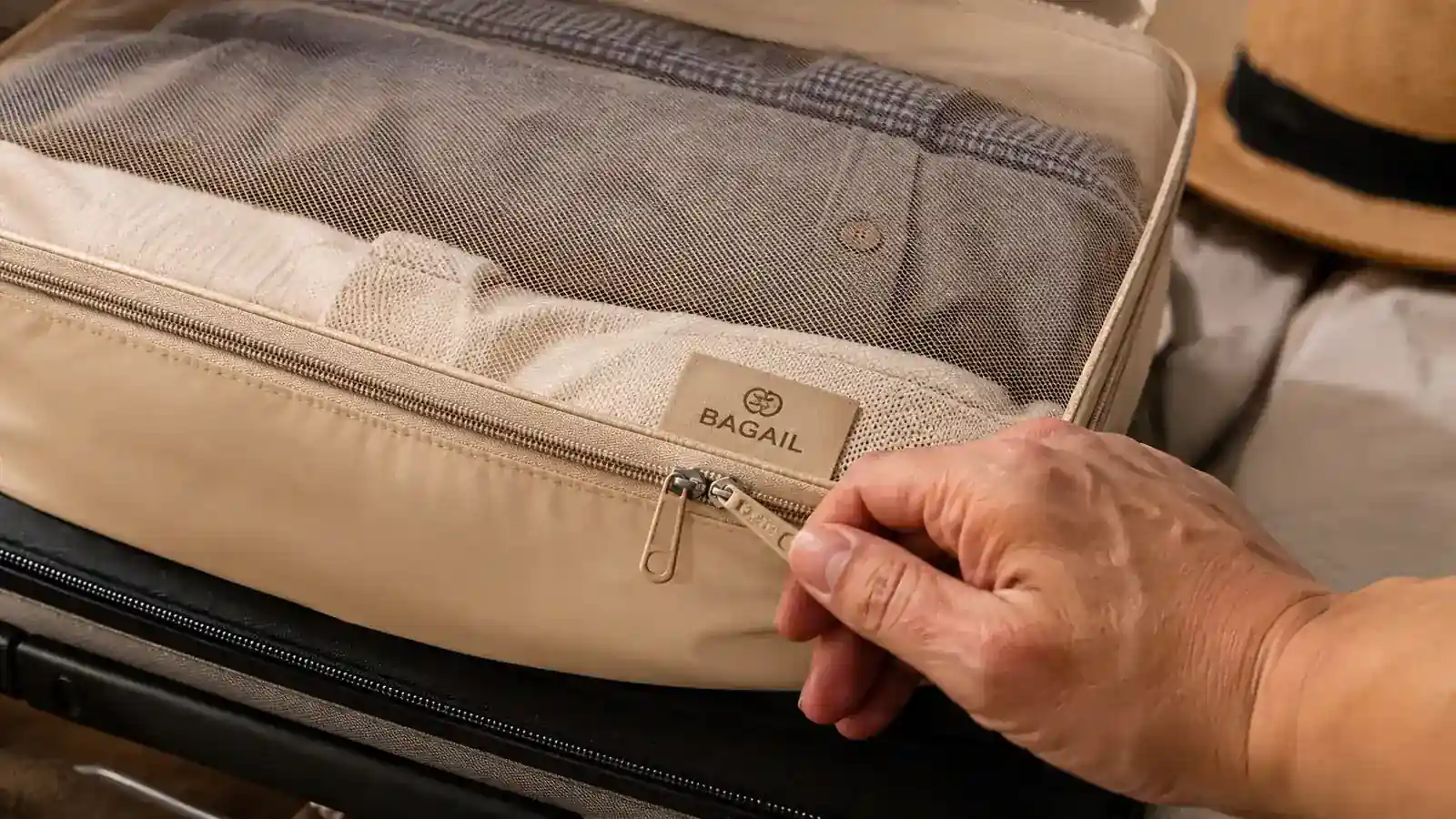
Where BAGAIL Packing Cubes Win
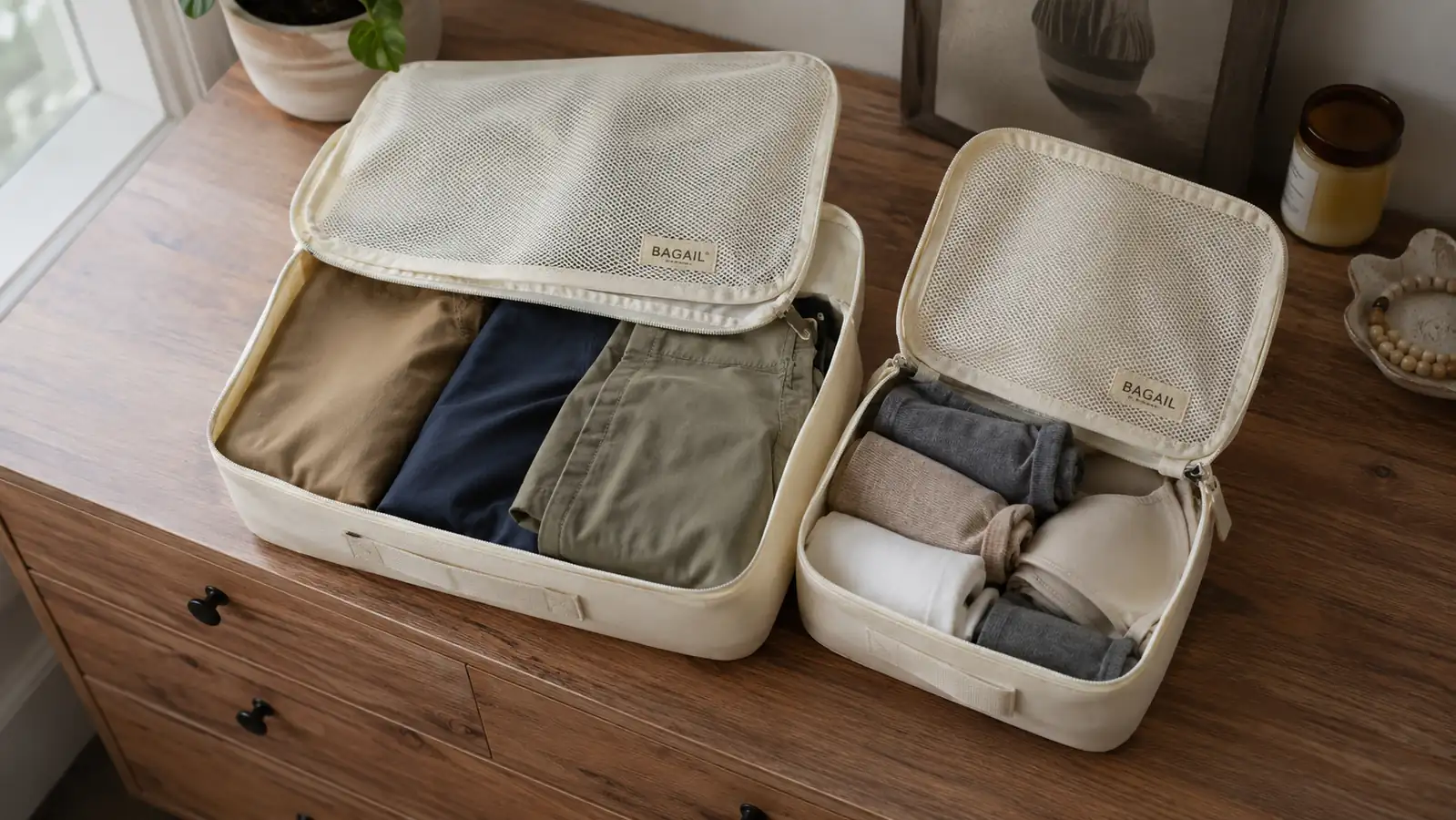
Organization is the whole game here, and it isn't close. The BAGAIL set gives you three sizes plus a couple of slim pouches, so I run one cube for shirts, one for pants and shorts, one for underwear and socks, and a flat pouch for cables and chargers. Everything has an assigned spot. When I land after a red-eye and I'm running on no sleep, I don't have to think about where anything is. I just unzip the labeled cube I need.
They also protect clothes better than a compression bag ever will. Folded shirts stay folded inside a cube. Roll a shirt into a compression bag with six other items and squeeze the air out, and you get a wrinkled mess by the time you land. For dress shirts or anything I need to walk into a meeting wearing, the cube system is the only one I'd trust.
There's a durability angle too. My set has been through 20-plus flights and a lot of overhead-bin abuse, and the double zippers and mesh panels are still intact. Compression bags live and die by their air valve and seams, and those are the first things to fail with regular use. If you want the play-by-play on how the material has held up stitch by stitch, that's covered in my honest review after 20-plus flights.
And there's a packing-speed angle most reviews skip entirely. Once you've settled into a routine, packing with cubes at home takes about the same amount of time as folding clothes directly into a suitcase, because you're folding into the cube instead of the bag. Compression bags add a rolling and squeezing step every single time, which sounds minor until you're doing it at 5am before an early flight for the tenth time that year.
Where Compression Bags Win
I'll give credit where it's due. If you're packing anything genuinely bulky, a down jacket, a fleece pullover, a couple of sweaters for a cold-weather trip, compression bags flatten that stuff in a way packing cubes simply can't. Cubes organize volume, they don't reduce it. A wool sweater takes up the same amount of space whether it's folded in a cube or loose in your bag.
Compression bags also make sense for one specific trip type, the kind where you're checking a bag stuffed to the limit and need every cubic inch you can get. If you're moving for a season, packing for a ski trip, or bringing home a haul of gifts, a compression bag earns its keep by shrinking the one or two bulky items that would otherwise blow your weight limit.
And they're genuinely useful as a secondary tool. I actually keep one compression bag in my closet for the rare trip where I need to pack a coat, and I use it alongside packing cubes rather than instead of them. It just doesn't replace cubes for the day-to-day job of keeping a carry-on organized.
One more honest point in their favor: compression bags are dead simple to use once, no learning curve, no sorting decisions to make. You roll everything into the bag and squeeze. That's appealing if you're the kind of traveler who packs the night before a flight and just wants the process over with, rather than someone who enjoys having a system.
Stop Unrolling Your Whole Bag to Find One Shirt
The BAGAIL 8-piece set keeps every category of clothing in its own labeled cube, so you're never digging through a flattened pile at 6am to find a clean shirt.
Amazon Check Today's Price on Amazon →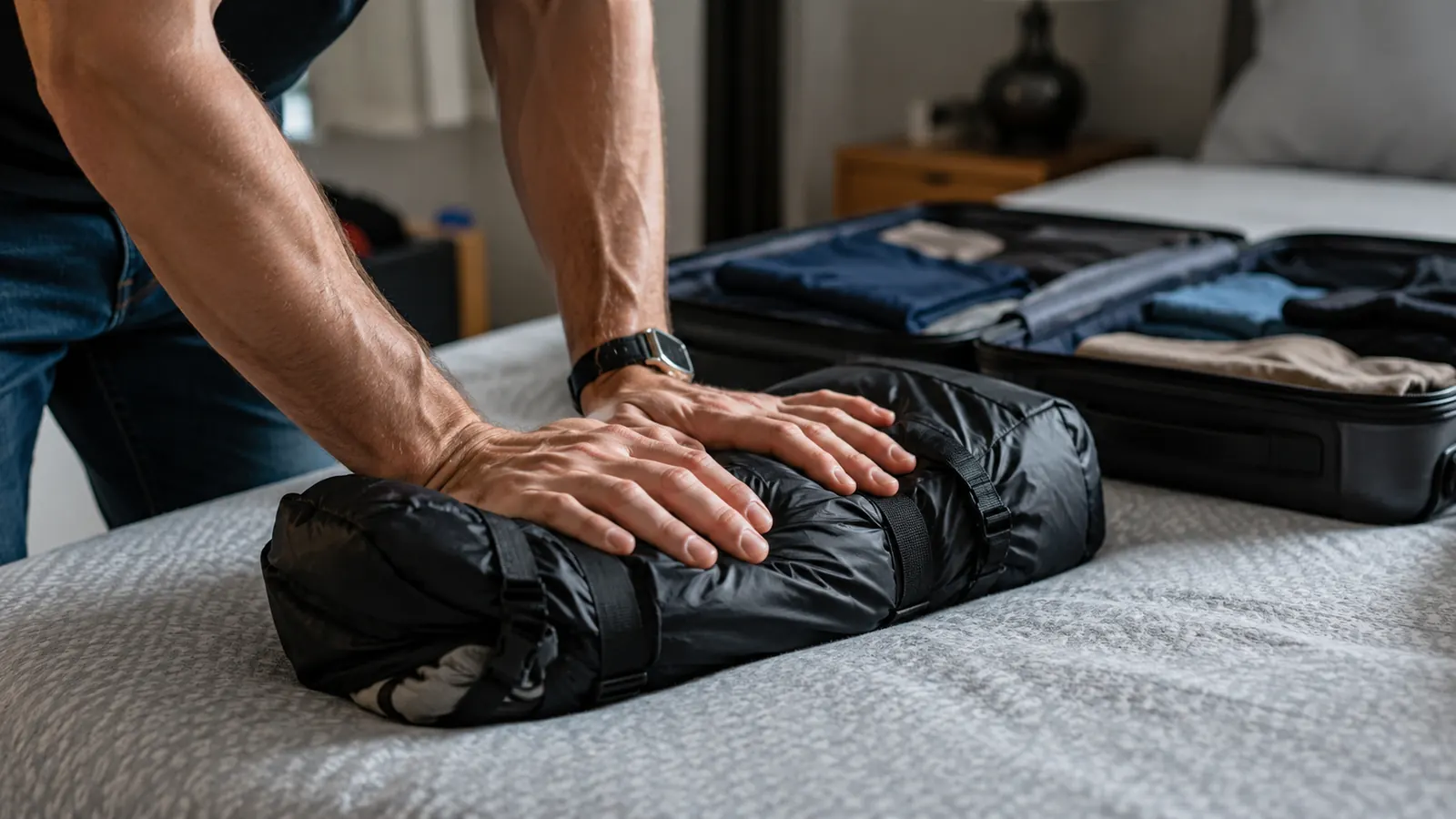
The Real Tradeoff Nobody Mentions
Here's the part most comparisons skip. Compression bags reduce volume by removing air, which means they work best on things that are mostly air to begin with, puffy jackets, sweaters, blankets. Packing cubes don't fight the fabric at all. They fight clutter. They take the same amount of stuff you were already bringing and stack it so tightly and so predictably that you stop wasting space on gaps and wasted corners. That's a different problem than squeezing air out of a sweater, and for most trips, it's the bigger problem.
Compression bags fight air. Packing cubes fight clutter. Most travelers have a clutter problem, not an air problem.
Most of the trips I take, and I'd guess most of yours too, are three to seven days with a mix of folded clothes, not a suitcase full of winter coats. For that kind of packing, the win isn't in squeezing volume, it's in never having to unpack the whole bag to find your socks. That's the gap that made me switch for good, and it's the same reason I walk through the exact packing method step by step in how to pack a carry-on with packing cubes.
There's also a wear-and-tear reality that only shows up after months of use. A compression bag's valve is a single point of failure. Once it stops holding a seal, the whole bag is dead weight, it won't compress anymore and it's just an extra layer of plastic around your clothes. A packing cube doesn't have a single point of failure like that. Worst case, one zipper pull wears out and you've still got seven working cubes and a set of usable fabric panels.
Carry-On vs Checked Bag Changes the Answer
This whole comparison shifts a little depending on whether you're flying carry-on only or checking a bag. For carry-on trips, where the limit is a fixed size and not really a weight problem, organization wins every time because you're not trying to shrink volume, you're trying to use the space you already have efficiently. That's most of my trips, and it's most of yours if you're honest about how often you're actually checking a bag.
For checked luggage on a longer trip, especially anything with a hard weight cutoff like 50 pounds, the math changes. That's when a compression bag earns a spot in the suitcase, specifically for the one or two bulky items, a coat, a pair of boots wrapped in a sweater, that would otherwise eat a huge chunk of your allowance. Even then, I still run cubes for everything else in the bag. The compression bag handles the one bulky exception, the cubes handle the other 90 percent.
Who Should Buy Which
If you travel more than a couple times a year, pack a mix of folded clothes, and want to open your bag knowing exactly where everything is, get the packing cubes. That's most travelers, and it's why the BAGAIL set is the one I recommend first. If you're only booking a single ski trip or a move where you need to shrink two or three bulky items and organization isn't the priority, a compression bag will do that specific job better.
The two aren't really enemies. I keep both in my closet. But if I could only own one, and I've made that choice for real over the last eight months, it's the cubes every time. I put together ten more reasons why in 10 reasons packing cubes save suitcase space if you want the deeper case for switching.
The System That Actually Kept My Bag Organized
Eight months, over 20 flights, and the BAGAIL cubes still zip shut clean. If you're tired of digging through a suitcase pile, this is the fix that stuck.
Amazon Check Today's Price on Amazon →