
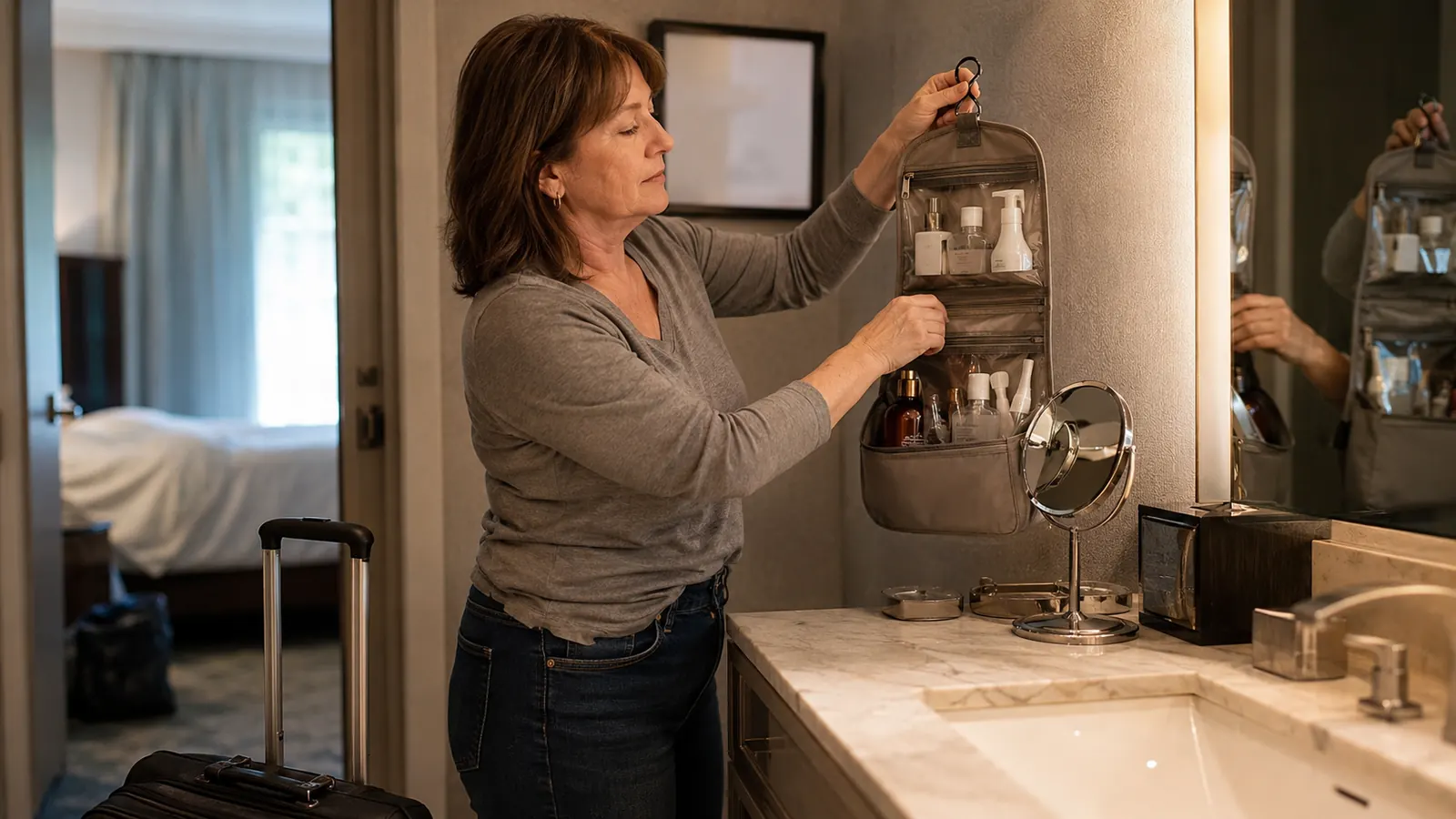
I've stood behind enough travelers at security to know exactly who is about to hold up the line before they even reach the bin. It's the person digging through a duffel bag for a bottle of mouthwash that's too big, or unzipping three different pockets because their toothpaste is buried somewhere in a backpack instead of packed where it belongs. A little planning the night before turns that five-minute scramble into a thirty-second pass through the checkpoint, and it starts with how you pack your toiletries, not what you do once you're standing in line. I learned most of this the slow way, one delayed line and one confiscated bottle of sunscreen at a time.
This is the method I use every time I fly with a carry-on, no checked bag. It's five steps, none of them complicated, and all of them built around the actual TSA rule rather than guesswork or old advice you half remember from a trip five years ago. A hanging toiletry bag with a built-in clear pouch, like the one I carry now, makes every step here faster, but the method works even if you're using a plain travel kit. Get the system right and the toiletry bag stops being the thing that slows you down.
Stop dumping your toiletries into a bin at the counter
A hanging toiletry bag with a built-in TSA-approved clear pouch means your liquids are already sorted before you reach the checkpoint. See today's price on the one I carry on every trip.
Amazon Check Today's Price on Amazon →Step 1: Know the 3-1-1 Rule Before You Pack a Single Bottle
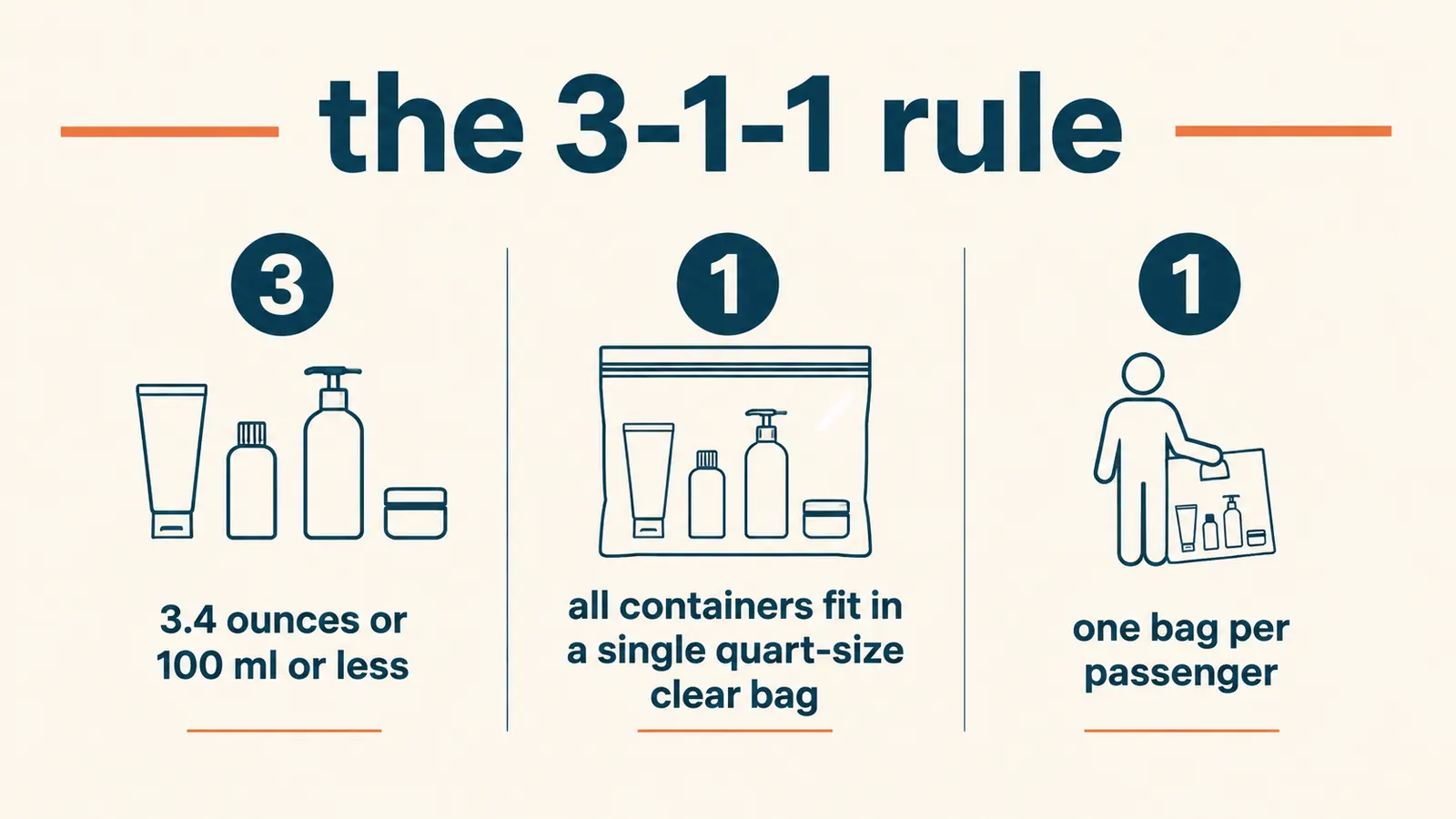
The rule TSA actually enforces for carry-on liquids is what's called 3-1-1. Each container has to hold 3.4 ounces or 100 milliliters or less, all of those containers have to fit inside one quart-size clear bag, and you get one bag per passenger. That's the whole rule. It's not about how much liquid is in the bottle, it's about the size of the container itself, so a mostly empty 8-ounce bottle of shampoo still gets pulled even if there's only an inch of product left in it.
I say this because I've watched people argue the point at the checkpoint and lose every time. The officer working the belt has the final call on what goes through and what doesn't, and TSA can and does update its guidance, so it's worth a quick check of tsa.gov before a trip if it's been a while since you've flown. What I'm laying out here is the standard rule as it stands, but nobody, including me, can promise you a specific bag or bottle sails through screening. Pack to the rule and you give yourself the best odds of a fast pass through.
This is also where a dedicated toiletry bag earns its keep. If your toiletries are loose in a backpack pocket, you're stopping to gather them up and sort them right there at the belt while the line backs up behind you. If they're already grouped in one bag with the liquids already isolated, you're just handing the whole thing over.
A quick word on the mistakes I see most often. Duty-free liquids bought after security are a different category, they get sealed in a tamper-evident bag with the receipt inside, and you should leave that seal alone until you're home, not transfer the bottle into your own toiletry bag on a connection. And aerosols, hairspray and dry shampoo mostly, still count under the same size limit even though they don't feel like a liquid in your hand. Treat anything that comes out of a nozzle or a pump the same way you'd treat a bottle of lotion.
Step 2: Choose Containers That Actually Meet the Limit
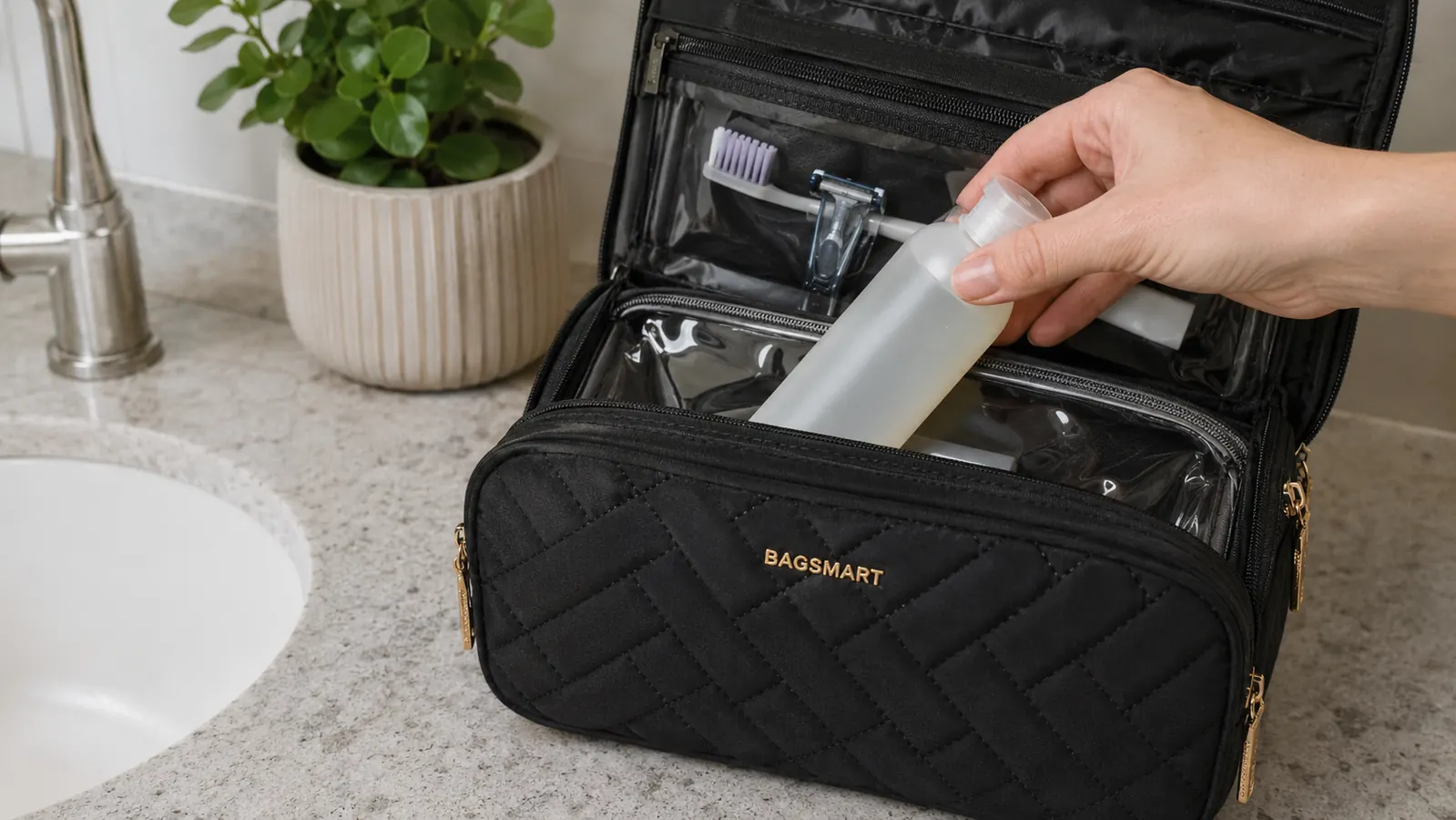
Buy your travel bottles once and reuse them, rather than trying to remember which half-used bottle in your bathroom happens to be under 3.4 ounces. I keep a set of small refillable bottles that live permanently in my toiletry bag between trips, so packing for a flight is a refill job, not a hunt through the cabinet the night before. Full-size products that already come in a small enough container, some travel toothpastes and lip balms, don't need to be decanted at all, they just need to fit the size limit as they are.
Solids sidestep the whole issue. A bar of soap, a solid shampoo bar, a stick deodorant, none of those count as liquids under the rule no matter the size, so if you're trying to pack lighter on the liquids side, that's where to start. For anything that does have to be liquid or gel, decant into the smallest bottle that'll actually hold what you need for the trip. Nobody needs a full 3.4-ounce bottle of conditioner for a two-day trip, and a half-full bottle takes up less room in the toiletry bag's clear pouch.
Step 3: Get Everything Liquid Into One Clear Bag
This is the step that trips people up most, not because it's hard but because it's easy to skip when you're packing in a hurry. Every liquid, gel, cream, and aerosol goes into a single quart-size clear bag, and that bag has to be easy to pull out and hand over separately from the rest of your carry-on. A hanging toiletry bag with a see-through zippered pouch built in solves this automatically, since the liquids are already sorted the moment you pack them and you're not hunting for a spare sandwich bag at 5 a.m.
I've used both setups, a plain toiletry bag with a loose plastic bag stuffed inside it, and a bag with the clear TSA pouch built into the design. The built-in version wins every time. The pouch stays attached to the bag instead of sliding around loose, it's sized right so you're not stuffing bottles into something meant for sandwiches, and it means one less thing to remember to buy or replace before a trip. If you want to see exactly how that setup holds up over real travel, I wrote the full breakdown in a year of TSA checkpoints with this bag.
Keep the quart bag zipped closed until you're actually asked to pull it out, and pack it near the top of your carry-on or in an outer pocket where you can grab it without unpacking half your bag. Some checkpoints still want it out of your bag and in a bin on its own, others don't, which is exactly why keeping it separate and easy to access matters more than trying to guess the rule at any one specific airport. If you're packing for a family, give each traveler their own quart bag rather than trying to combine everyone's liquids into one, since the one-bag-per-passenger part of the rule isn't optional either.
Step 4: Organize the Rest of the Toiletry Bag Around the Liquids
Once your liquids are handled, the rest of the toiletry bag is about keeping things you'll actually use separated from things that could make a mess if they leaked. I keep a toothbrush and razor in a dry compartment away from the liquids pouch, and anything with a cap that's ever failed on me before, looking at you, sunscreen, gets a second layer, either a small zip bag of its own or wrapped in a spare plastic bag before it goes in. One leaked bottle in a shared compartment ruins everything else packed next to it, and I learned that lesson exactly once.
A bag that hangs from a hook rather than sitting flat on a hotel counter also changes how you use it once you land, not just how you get through security. If you're weighing that against a traditional flat dopp kit, I put the two side by side in hanging toiletry bag versus classic dopp kit, and if you want the fuller list of why hanging wins for most trips, it's laid out in ten reasons hanging toiletry bags beat dopp kits.
Step 5: Know What Actually Happens at the Checkpoint
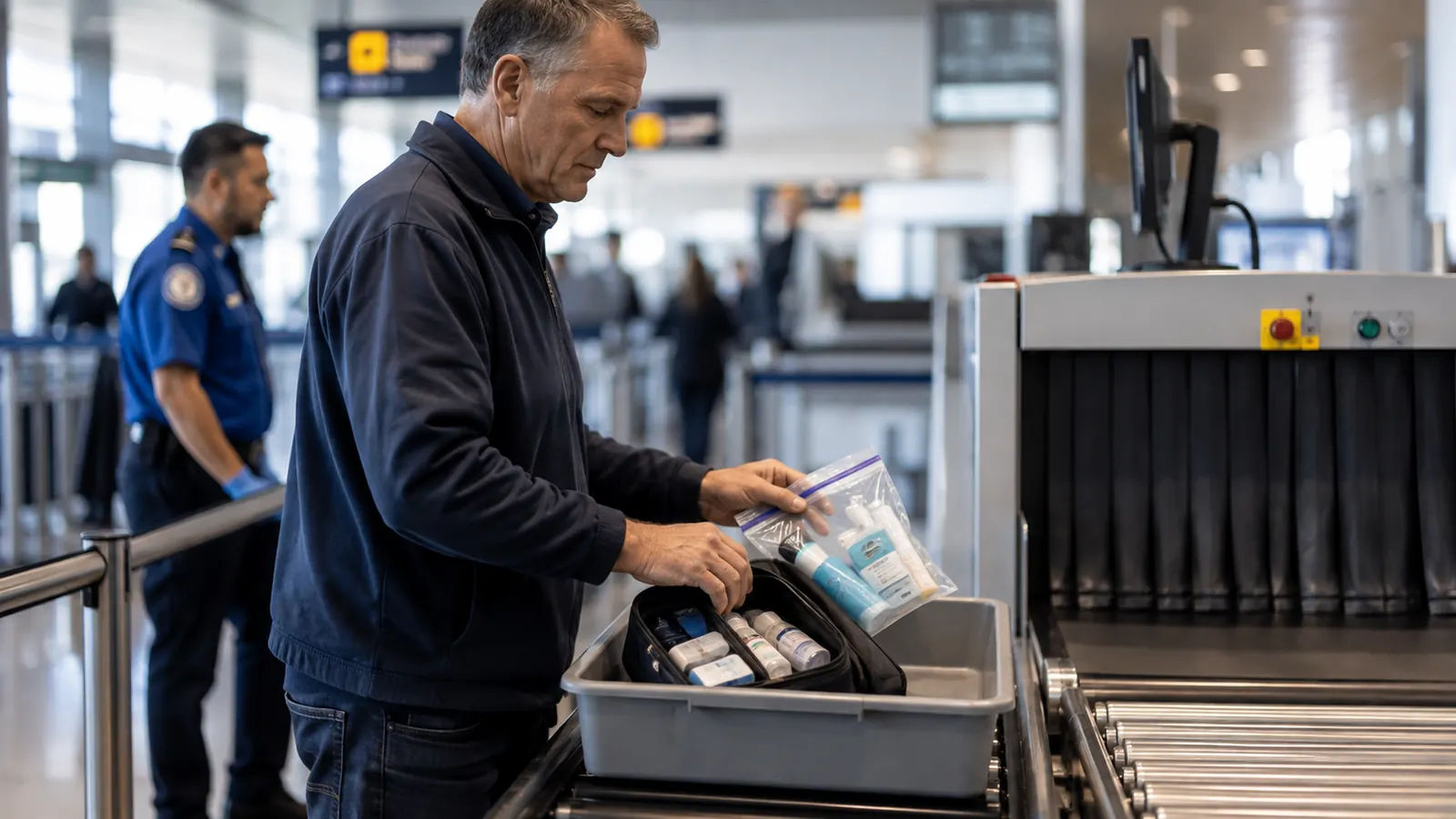
Most checkpoints still want your quart bag of liquids pulled out and placed in its own bin, separate from the rest of your carry-on, though some newer scanning lanes let you leave it packed. Watch what the line ahead of you is doing and follow the officer's instructions for that specific lane rather than assuming it'll be the same as your last trip through a different airport. Airports don't all run the same equipment, and the officer at that checkpoint has the last word regardless of what worked for you last time.
If something in your toiletry bag gets pulled for a second look, that's normal and it's fast if your bag is organized. A liquids pouch that's clearly visible and easy to open, rather than buried under clothes, gets you through a secondary check in under a minute instead of standing there while an officer digs through your whole bag. This is really the payoff for every earlier step, an organized toiletry bag doesn't just look neat, it moves faster through actual screening.
What Else Helps
Medically necessary liquids, things like prescription medication, contact solution beyond the standard limit, or baby formula, are allowed in larger quantities than the 3-1-1 rule, but you have to declare them separately at the checkpoint. Don't bury those in your regular toiletries pouch. Keep them in their own labeled bag so there's no confusion about which liquids fall under the standard rule and which ones don't.
TSA PreCheck changes some of this, since most PreCheck lanes let you keep liquids and electronics packed rather than pulling everything out, but the container size limits still apply even in PreCheck. It's worth the application if you fly more than a couple times a year, but don't count on it being available at every checkpoint or every airport you'll pass through.
If you're doing a carry-on-only trip longer than a few days, plan on buying full-size toiletries at your destination rather than trying to stretch travel-size bottles the whole way. It's a small habit, but it means you're not packing four half-empty bottles of the same shampoo just because none of them alone met the limit. A grocery store or pharmacy near almost any hotel solves that faster than trying to game the size limits from home.
Restock your toiletry bag as soon as you land back home, not the night before your next trip. I keep a running mental note of what ran low on the last trip and refill bottles that week while it's still fresh, rather than discovering an empty travel bottle of contact solution at 5 a.m. before a flight. A bag with sturdy zippers and a hook that actually holds its weight over a hotel towel bar matters here too. If you're curious how mine held up after daily use on the road rather than the marketing copy on the listing, I laid it all out in the honest review after daily use. And once your toiletries and your carry-on are sorted, the next thing worth locking down is your checked bag itself, which I cover in how to secure checked luggage with a TSA lock.
A fast checkpoint isn't luck. It's a toiletry bag that was already organized before you left the house.
Pack once, breeze through every checkpoint after
A hanging toiletry bag with a built-in clear TSA pouch keeps your liquids sorted and your carry-on organized from the hotel counter to the security line. Check today's price before your next trip.
Amazon Check Today's Price on Amazon →