
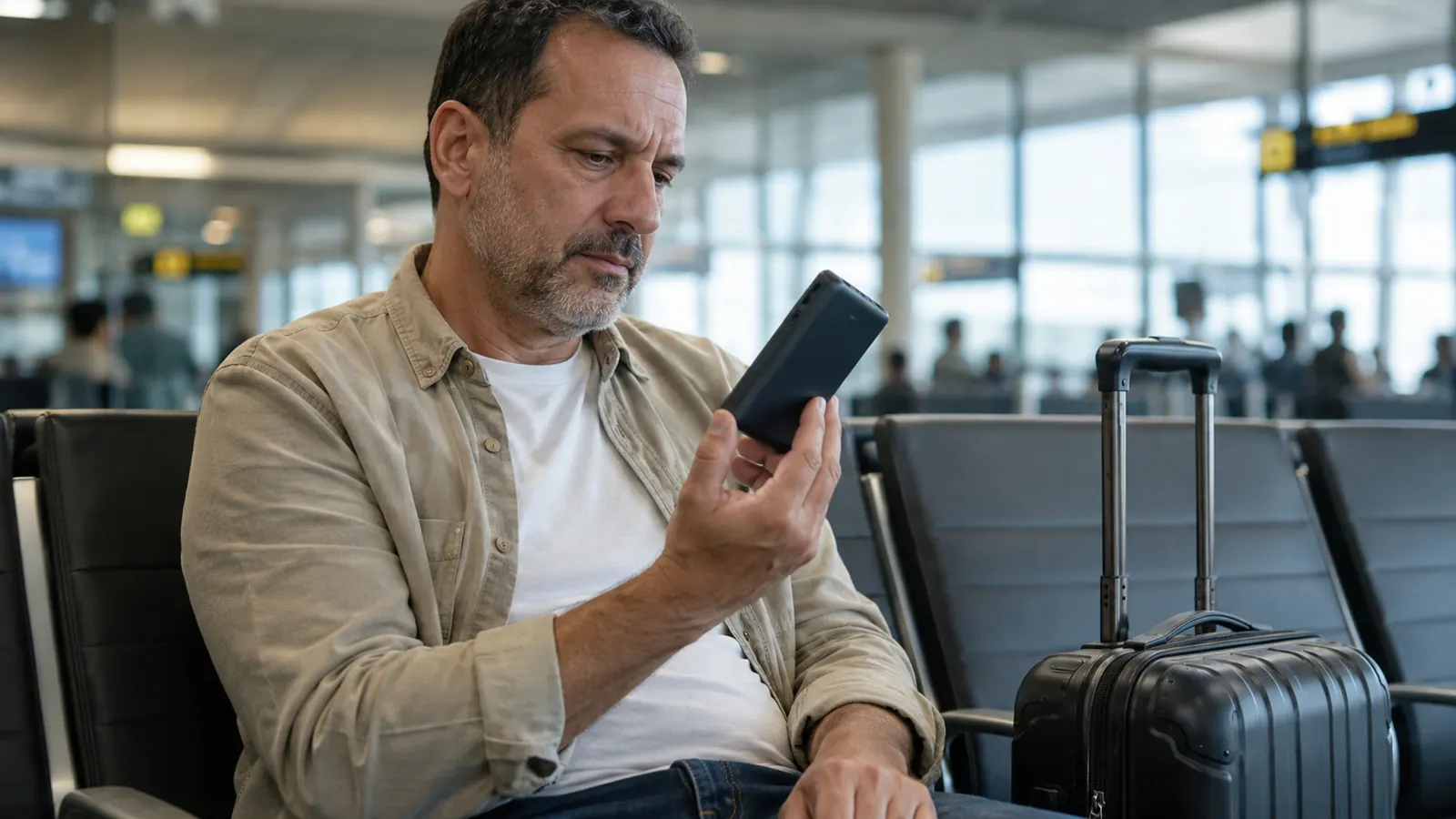
I'm going to break the reviewer rulebook here and start with what's wrong with the INIU 45W power bank, because that's the part every five-star review skips over. I've put more than 100 charge cycles on mine since April, hauling it through airports, tucking it into my son Mark's backpack for a graduation trip to Nashville, and once nearly leaving both of us with dead phones on a ridge in the Smoky Mountains. If you only read the glowing reviews, you'd think this thing has no downsides. It does. Several. Once you know what they are, you can decide for yourself whether they're deal breakers or things you can live with.
This isn't the piece where I tell you a 10000mAh brick from INIU changed my life. It's a power bank. It charges phones. What I want to do here is walk you through what annoyed me, the one trip where it actually let me down, and why, even with all that, it's still the one I reach for over the two other banks sitting in my junk drawer. If you want the week-by-week, day-in-the-life version instead, I already wrote that long-term INIU power bank review. This one leans into the warts.
The Quick Verdict
Fast, pocket-sized, and it has genuinely earned its keep after more than 100 charges, but the single port and a rough backpacking trip taught me its real limits before I fully trusted it.
Amazon Check Today's Price →Before You Buy Another Cheap Power Bank That Dies in a Year
I went through two bargain-bin banks before this one, both dead within a season. The INIU isn't perfect, but it's the first one that survived more than 100 charges without losing real capacity.
Amazon Check Today's Price on Amazon →How I Actually Tested It
I didn't run this thing on a bench with a multimeter. I ran it the way you actually will, shoved in a backpack side pocket, forgotten about until a phone hit 12%, occasionally left in a hot truck cab in July. Between April and now that's added up to somewhere past 100 charge cycles, based on the little percentage readout on the front. No babying, no special storage, none of the resting-between-uses advice you sometimes see in review guides.
My wife Linda has her own charging habits, my son Mark borrows gear and rarely asks first, and I travel enough for work that this bank has seen backpacks, glove compartments, hotel nightstands, and one memorable stretch zipped into a rain jacket pocket during a storm in Nashville. That's the environment I'm reviewing it from, not a lab bench.
I also handed it off deliberately a few times, not by accident. My mother-in-law used it for a week during a visit last fall, my brother borrowed it for a weekend before I could get it back, and a coworker ran it hard during a five-hour drive to a conference. None of that was controlled, and I didn't want it to be. A power bank that only performs well when you baby it isn't a power bank worth recommending to anyone.
So here's the honest rundown, complaints first.
The Complaints Nobody Mentions
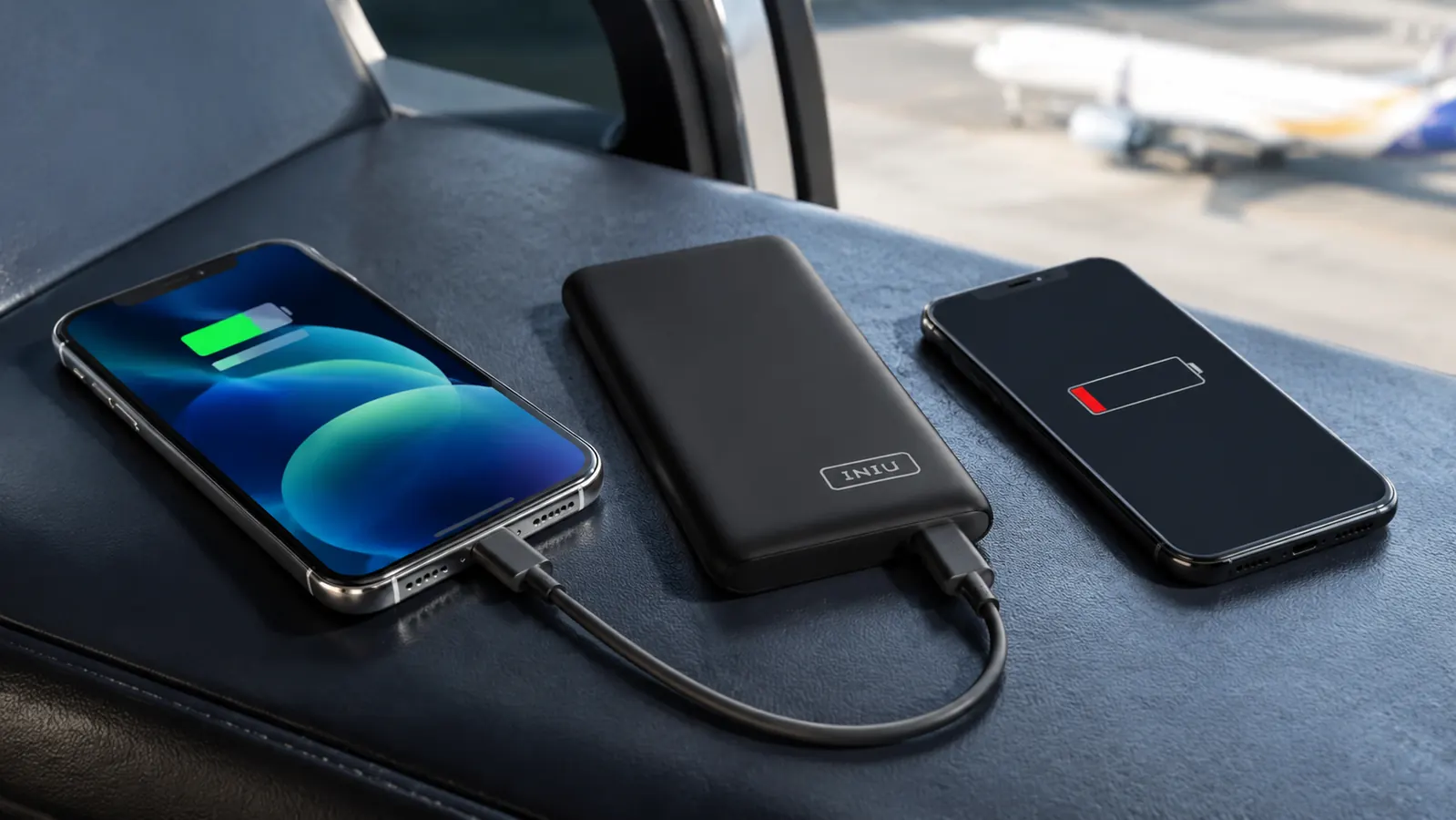
Start with the single port. This bank fast-charges one device at a time, full stop. That's obvious when you read the spec sheet, but it doesn't really hit you until you're standing at a gate with Linda's phone at 9% and yours at 15%, taking turns like it's a hotel bathroom. We've had this exact argument twice, once in an airport, once in a rental car. If you're traveling as a couple or a family and expect to charge two phones off one bank at once, know going in that you'll be trading it back and forth, not running two cables side by side.
Second complaint: no wall charger in the box. INIU includes the bank itself and a cable, but if you want to charge the bank at its full 45W speed from a wall outlet, you need to already own a compatible fast-charge brick, or buy one separately. I had one left over from an old phone, so it wasn't a real cost to me, but if you're starting from zero, budget for that extra piece before you assume you're getting a complete kit.
There's also a compatibility wrinkle worth knowing. The full 45W speed only shows up when both the phone and the cable support it. My mother-in-law's older phone tops out around 18W no matter what you plug it into, so the INIU just charges it at that phone's own ceiling, not the bank's rated speed. That's true of every fast-charging bank on the market, not something specific to this one, but it's the kind of detail that gets buried in the marketing copy and then disappoints someone who assumed the number on the box applied to every device they own.
Third, the plastic casing scuffs. Mine has picked up light scratches and a few scuff marks from riding loose in bag pockets alongside keys and coins. It's cosmetic, it hasn't affected how the thing works, but if you want something that still looks new after a summer of travel, this isn't that. And the LED percentage display on the front is small enough that I genuinely can't read it in bright sunlight, which is exactly the moment you most want to glance down and check how much charge you've got left before a flight.
The Backpacking Trip That Taught Me Its Real Limit
Here's the one that actually stung. Mark and I did a two-day, one-night backpacking trip in the Great Smoky Mountains in June, no outlets, spotty cell service, just a trail, a tent, and phones we used for photos, a map app on the way in, and a flashlight app once the sun went down. I brought the INIU as our only backup power, figuring a 10000mAh bank would easily cover two phones for two days of light use.
It didn't. Between his phone, my phone, and a few photo-heavy stretches where we both had the camera running, we drained the bank down to nothing by the second afternoon, hours before we made it back to the trailhead. We weren't in danger, I'd packed a paper map as backup and I'm not reckless enough to rely on a phone alone in the backcountry, but it was a real lesson: a single 10000mAh bank is built for topping off a phone during a travel day, not for keeping two phones alive across a full multi-day trip with no outlets anywhere in sight.
That trip changed how I think about this bank's actual job. It's an excellent travel-day companion. It is not an off-grid survival tool, and INIU never claimed it was, that expectation was on me. I've since started packing a second, higher-capacity bank for anything longer than an overnight without power, and I'd tell anyone eyeing this one for a serious backcountry trip to run that same math before they leave the trailhead.
Where It Actually Won Me Back
So why does it still ride in my everyday bag despite all that? Because on the trips it's actually built for, the ordinary travel days, it just works, and it works fast. A rough delay out of Chicago O'Hare this spring is the trip that sold me. Four hours sitting at a gate with exactly one outlet in sight and a line of people standing around it, and I never got up. I ran my phone the entire wait, texted Linda updates, pulled up the gate-change alert twice, and still had over half a charge left on the bank when we finally boarded.
The charge speed is the real difference from every cheap bank I owned before it. Starting from 10%, thirty minutes on this thing got my phone up past 55%. My old 18W bank never got close to that in the same window. When you've got a short layover and a phone that's about to die, that difference is the whole ballgame, and it's the part of this review that isn't a complaint at all.
Size is part of why it's stayed in rotation too. It weighs about 7.6 ounces and measures roughly 4.3 by 2.2 by 1 inch, small enough to disappear into a jacket pocket but with enough heft that you know it's there. Despite the scuffing I mentioned earlier, I've dropped it on airport tile twice without a single crack or dead spot on the casing, which says more about its durability than the cosmetic wear does.
The built-in, detachable USB-C cable is the other thing that's kept it in rotation. I stopped losing charging cables the day I stopped needing a separate one for this bank. It clips to the side, it's there when I need it, and it detaches if I need to plug the bank itself into a wall charger instead.
Heat and Wear After 100+ Cycles
Heat is the thing I watched closest, because that's usually where cheap electronics start cutting corners. Fast charging generates more warmth than slow charging, no way around that with any brand at this wattage. The INIU gets warm to the touch during a full 45W session, never hot enough to be uncomfortable to hold, and it cools down within a couple minutes once the phone's charge rate slows on its own near the top.
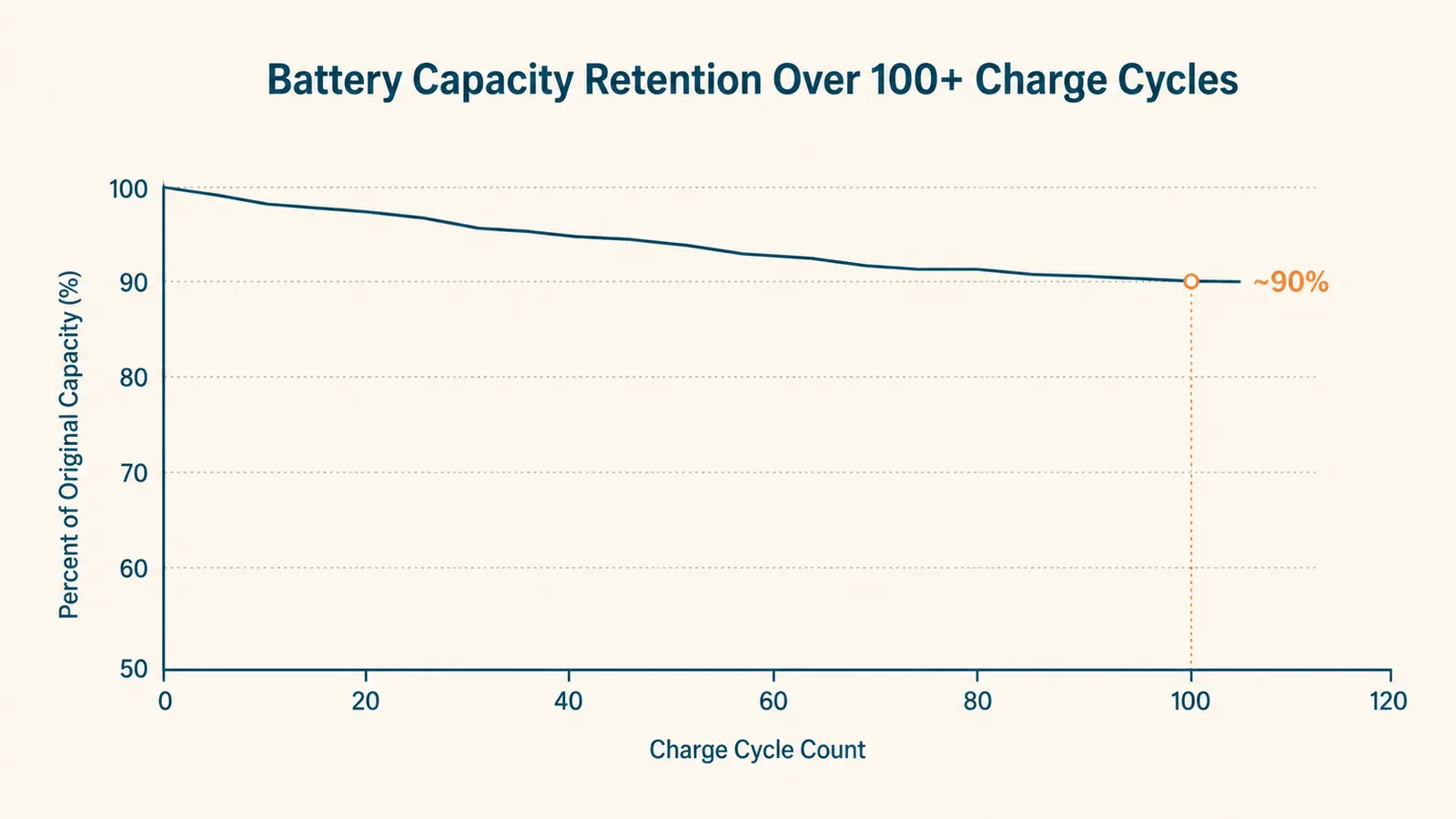
Capacity is the other thing that matters more, long term. Lithium batteries lose some ability to hold a full charge as the cycle count climbs, that's chemistry, not a defect, and it's the reason I wanted to write this review after triple-digit cycles instead of after two weeks like a lot of reviews do. Running a fresh-to-empty test against my phone recently, the bank still delivered close to what it did back in April, no sharp drop-off, just the slow, expected fade every lithium battery goes through.
The one component I keep an eye on is the built-in cable, since it's the part you can't replace if it frays. Mine still works fine after more than 100 cycles, but I've gotten more deliberate about not yanking it out of the port at odd angles, since that's usually where a built-in cable fails first on any brand's power bank.
Flight Rules Worth Knowing Before You Pack It
One thing that isn't a complaint, just a rule every traveler needs to know: lithium power banks, this one included, have to go in your carry-on bag. Never checked baggage. TSA and the FAA treat them as a fire risk that needs to stay somewhere a crew member can reach it. At roughly 37 watt-hours, this bank sits comfortably under the FAA's 100Wh carry-on limit, and I've walked it through security in half a dozen airports without a single question from an agent. I laid out my whole pre-flight routine, this bank included, in how I keep my phone charged on flights.

How It Compares
I looked hard at an Anker bank in the same price range before buying this one, and I put together the full head-to-head in INIU vs Anker power bank if you want the direct comparison. Short version: the INIU won me over on the built-in cable and pocket size, Anker has the bigger name and a broader accessory ecosystem if that matters to you. If you're still deciding whether a power bank belongs in your bag at all, I laid out the case in 10 reasons you need a travel power bank, and if you want the full story of the one delay that made me a believer, I told it start to finish in how a power bank saved me during a six-hour delay.
What I Liked
- Genuinely fast real-world charging, noticeably quicker than an older 18W bank
- Built-in detachable USB-C cable means one less thing to pack or lose
- Small enough to disappear into a jacket pocket or bag side pouch
- Stayed under the FAA's 100Wh carry-on threshold on every trip I've taken
- Held real capacity after more than 100 charge cycles
Where It Falls Short
- Single port means two people or two devices have to take turns
- No wall charger included for charging the bank itself at full speed
- Plastic casing shows scuffs and scratches after regular travel use
- Not enough capacity on its own for a multi-day trip with no outlets
- Small LED display is hard to read in bright sunlight
It's not the bank I'd trust on a three-day trail with no outlets. It's the bank I trust on every ordinary travel day, and that's most days.
Who This Is For
If your trips are ordinary travel days, flights, road trips, long waits in terminals, hotel stays where the outlet is always behind the nightstand, this bank is built exactly for that. It's light, it's fast, and the built-in cable means you're never digging through a bag hunting for a charger fifteen minutes before boarding. It's also a fine, low-effort pick for a family member who travels but doesn't want to think hard about gear. My daughter Julie has carried the same model since I sent her one before a trip to Denver last year and hasn't complained once.
Who Should Skip It
If you're regularly charging two people's phones off one bank, or you're headed somewhere off-grid for more than a day with no outlets in sight, this single 10000mAh bank is going to come up short, I found that out the hard way in the Smokies. Look at a higher-capacity, multi-port bank instead, and be honest with yourself about how much extra bulk you're willing to carry to get there. Anyone who wants a bank that still looks brand new after a season of travel should also know the plastic casing does pick up scuffs, this one is built for function over polish.
The Complaints Are Real. So Is the Fact I Still Pack It Every Trip.
No power bank is perfect, and I've told you exactly where this one falls short. But for the ordinary travel days that make up most of any trip, it's still the first thing I grab on my way out the door.
Amazon Check Today's Price on Amazon →